The Best Filament Dryers of 2026
| Product | Score | Max temperature & evenness(30%) | Spool capacity(20%) | 3-Year Cost |
|---|---|---|---|---|
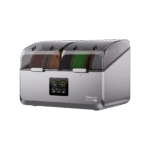 Creality SpacePi X4Best Overall |
7.7 |
8.5/10 |
8.5/10 |
$226.01checked Sep 15, 2026 |
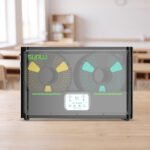 SUNLU FilaDryer S4Also Consider |
7.0 |
6.0/10 |
8.5/10 |
$176.56checked Sep 15, 2026 |
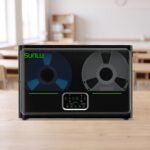 SUNLU FilaDryer S4 ProAlso Consider |
6.9 |
7.0/10 |
8.5/10 |
$210.73checked Sep 15, 2026 |
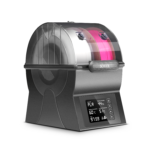 Sovol SH02Best Value |
6.7 |
6.5/10 |
5.5/10 |
$87.91checked Sep 15, 2026 |
 Polymaker PolyDryer (Dock + Box)Also Consider |
6.5 |
6.0/10 |
4.5/10 |
$92.65checked Sep 15, 2026 |
Sorted by score. Prices come from each seller's site on the date shown and change often.
Brand claim vs independent measurement
| Product | What the brand claims | Independent figure | Source |
|---|---|---|---|
| Creality SpacePi X4Spool temperature vs 60 C setpoint | 45 to 85 C range | Overshoot of about 2 C at the spool, the smallest in its family; Makers101 relays this from a three-way comparison and does not name the tester | Makers101 |
| Creality SpacePi X4Power draw | 360 W rated | The reviewer's UPS (600 W continuous, 1200 W spikes) tripped on startup, suggesting initial spikes above 600 W; normal draw 120 W, 200 W or 360 W depending on chambers in use | The Phonograph |
| SUNLU FilaDryer S4Temperature evenness | +/-3 C across the chamber | A thermal-camera test reported by Makers101 shows about a 10 C gap between the hottest and coolest parts of the chamber | Makers101 |
| SUNLU FilaDryer S4Power draw | 320 W rated | About 400 W while heating and about 80 W while holding temperature | Gambody |
| SUNLU FilaDryer S4 ProMax temperature | 85 C, dual-zone | No independent temperature or power measurement of the S4 Pro found on Oct 23, 2026; the search returned only S4 data | SUNLU store page (brand claim only) |
| Polymaker PolyDryerSealing | Under 5% humidity change in 30 days at 20 C and 60% RH | No independent humidity test found; the only figure is Polymaker's own experiment | Polymaker |
We do not run these tests ourselves. Independent figures are quoted from the source named in each row.
The Creality SpacePi X4 is the best filament dryer for most serious printers right now: four spools, two independent chambers and an 85 C ceiling for $159.00 (price read Oct 23, 2026). Buy it if you print nylon, PC or carbon-fiber blends, or run several printers off one box. If you only print PLA and PETG, the SUNLU FilaDryer S4 at $116.99 or the Sovol SH02 at $59.99 does the job for less.
Picks here come from published specs, certification databases and named third-party measurements, not from our own lab (how we score). Polymaker’s PolyDryer suits people who want a sealed box that doubles as storage. The SUNLU S4 Pro is a newer four-spool model with an 85 C claim, but we found no independent measurement of it, so it ranks on brand specs and a lower confidence.
How we picked
We scored five dryers on five weighted criteria: max temperature and evenness (30%), spool capacity (20%), print-while-drying and humidity display (15%), build and safety (15%) and 3-year cost (20%). The cost math is price plus electricity, assuming 1 hour a day at full rated power at $0.17 per kWh. Rated watts come from each brand, so a dryer that mostly holds temperature will cost less to run.
The final order is Creality SpacePi X4 at 7.7, SUNLU FilaDryer S4 at 7.0, SUNLU FilaDryer S4 Pro at 6.9, Sovol SH02 at 6.7 and Polymaker PolyDryer at 6.5. Every pick cleared 6.0. The scores are close for a reason: the cheap dryers lose points on capacity and heat but win them back on cost, and the premium ones do the reverse. Which one is right for you depends on the filament, not on the total score. If you want only the lowest 3-year cost, the SH02 at $87.91 and the PolyDryer at $92.65 lead; the X4 is the most expensive to own at $226.01 and earns it with its 85 C range.
Sources we read: the brand store pages for Creality, SUNLU, Sovol and Polymaker; the CPSC SaferProducts recall database (no recall found on Oct 23, 2026 for “filament dryer”, Creality, SUNLU, Sovol or Polymaker); and named reviewers including The Phonograph, Makers101, Gambody and Creality Experts. Where nobody publishes an independent figure, the table of measurements says so. The picks are researched from published data, not tested in our own lab, as explained on How we score. This article exists because SUNLU is an affiliate partner, and the scores follow the evidence only.
What to look for
- Max temperature by material. Makers101’s chart lists PLA at 45 to 55 C, PETG at 55 to 65 C, ABS and ASA at 60 to 70 C, nylon at 70 to 80 C and PC at 80 to 90 C. A 70 C dryer covers everything up to ABS; pick 85 C for nylon and PC.
- Capacity that matches your spools. Check the spool limit. The SpacePi X4 takes spools up to 200 mm in diameter and 150 mm wide; the PolyDryer box takes 205 mm by 78 mm and one spool.
- A feed port for printing while drying. Look for PTFE outlets. For nylon, drying while printing is the setup Makers101 calls ideal.
- A humidity readout you can cross-check. Makers101 reports that the built-in sensor on the cheaper SUNLU S2 reads far higher than other meters, so keep a standalone hygrometer in the box and trust it over the dryer’s own number.
- A lid gasket if you want storage. No gasket means no airtight storage when the power is off. The PolyDryer box and the Sovol SH02 are built with seals.
- Rated power under 400 W and a safety rating. The SpacePi X4 lists a UL 94 V-0 flame rating for its housing. Unplug any heater you will not watch.
FAQ
Do I need a filament dryer at all?
Not always. Makers101 says dry-stored PLA and ABS often skip the dryer, while PETG, TPU and nylon are where a dryer matters. Rule out slicer settings and a worn nozzle first.
What is the best filament dryer for nylon?
The Creality SpacePi X4, because it is the only pick with a published 85 C range and two chambers. The SUNLU S4 Pro claims 85 C too, but no independent figure exists yet. For PLA, see our best PLA filament list.
Can I print while the filament is drying?
Yes on the X4, S4, SH02 and PolyDryer, per their brand pages and reviewers. The X4 has 8 PTFE connections, the S4 has 8 filament holes and the PolyDryer has a continuous drying mode. The S4 Pro page we read lists four spools but we did not confirm its feed layout. Keep tube bends gentle so the filament does not snap, a warning other reviewers give for brittle filament.
Is the SUNLU S4 still worth it?
Yes for PLA, PETG and TPU on a budget. A reviewer cited by Makers101 found about a 10 C gap across the chamber, so set the temperature 5 to 10 C below a preset. Read our SUNLU FilaDryer S4 review.
Should I buy one big dryer or several small ones?
It depends on how many materials you run at once. A SpacePi X4 or S4 Pro handles four spools in one footprint, and the X4 and S4 Pro let you set two different temperatures. The PolyDryer works the other way: one $79.99 dock with extra $29.99 boxes, one spool each. Four spools that way cost about $170 before electricity, and you can only dry one box at a time on a single dock. For electricity, 3 years at 1 hour a day of full rated power runs from $12.66 for the PolyDryer dock to $70.74 for the S4 Pro, and your own cycles will differ.
Best Overall: Creality SpacePi X4

Creality SpacePi X4
We don't earn anything from this link.
What we like
- +Only 85 C unit here, enough range for nylon
- +Two chambers set to different temperatures
- +Humidity and temperature shown per chamber
- +Reviewer-relayed spool temperature overshoot of 2 C on a 60 C setpoint
What we don't
- −Highest 3-year cost of the five
- −Power spikes above 600 W when starting, per one reviewer
- −No spool rotation
- −Owners say it only holds humidity if the auto cycle is on
Skip it if
You only print PLA and PETG and will never dry nylon or PC.
The Practical Math · 3 years
| Purchase price (Creality US store, Oct 23, 2026) | $159.00 |
| Electricity: 360 W rated x 1 hour per day x 365 x 3 years x $0.17 per kWh (assumes 1 hour per day at full rated power) | $67.01 |
| Total | $226.01 |
Also Consider: SUNLU FilaDryer S4
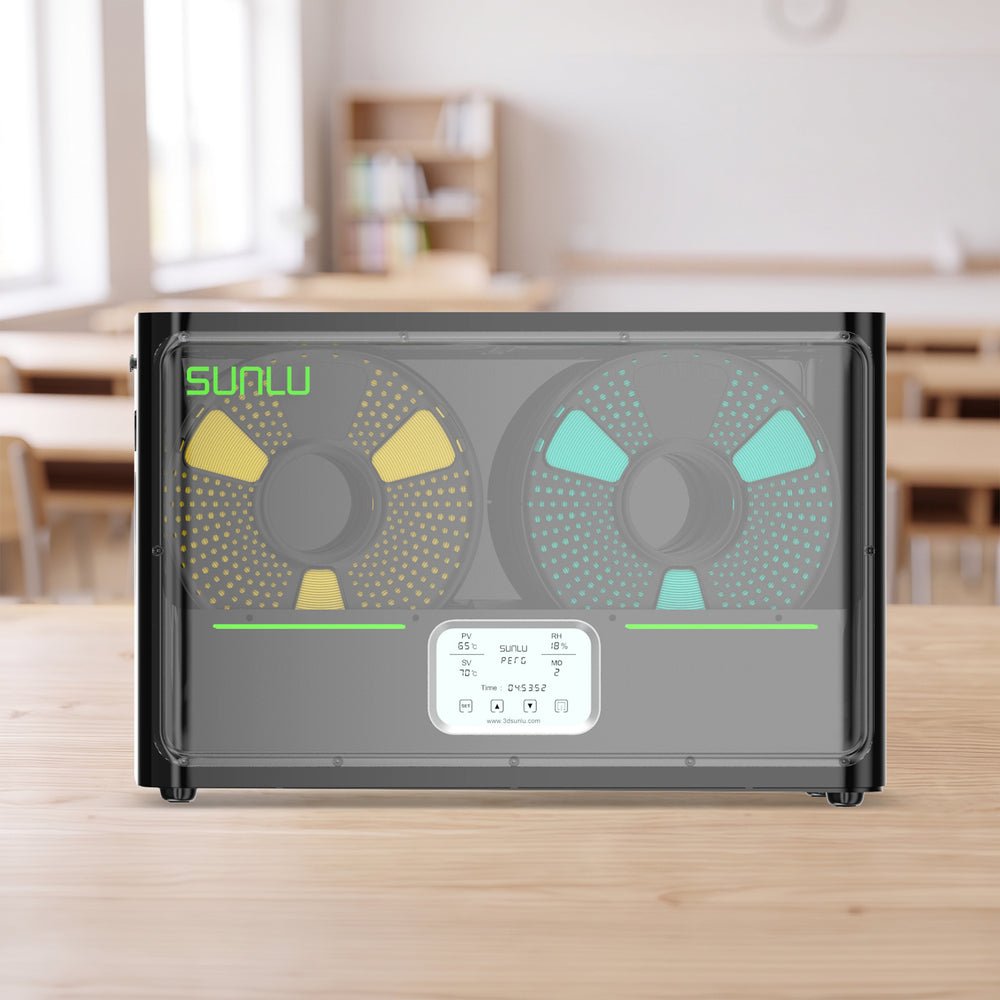
SUNLU FilaDryer S4
Paid link · price checked Sep 15, 2026
What we like
- +Holds four 1 kg spools at once
- +Eight feed holes for printing while drying
- +Humidity mode matched its description in one review
- +About $117 on the brand store
What we don't
- −About 10 C temperature spread in a thermal-camera test
- −70 C ceiling is short for nylon
- −No lid gasket, so not airtight storage
- −Audible fan noise, about 62 dB in one review
Skip it if
You dry nylon or PC, need airtight storage, or work in a quiet room.
The Practical Math · 3 years
| Purchase price (SUNLU store, Oct 23, 2026) | $116.99 |
| Electricity: 320 W rated x 1 hour per day x 365 x 3 years x $0.17 per kWh (assumes 1 hour per day at full rated power) | $59.57 |
| Total | $176.56 |
Also Consider: SUNLU FilaDryer S4 Pro
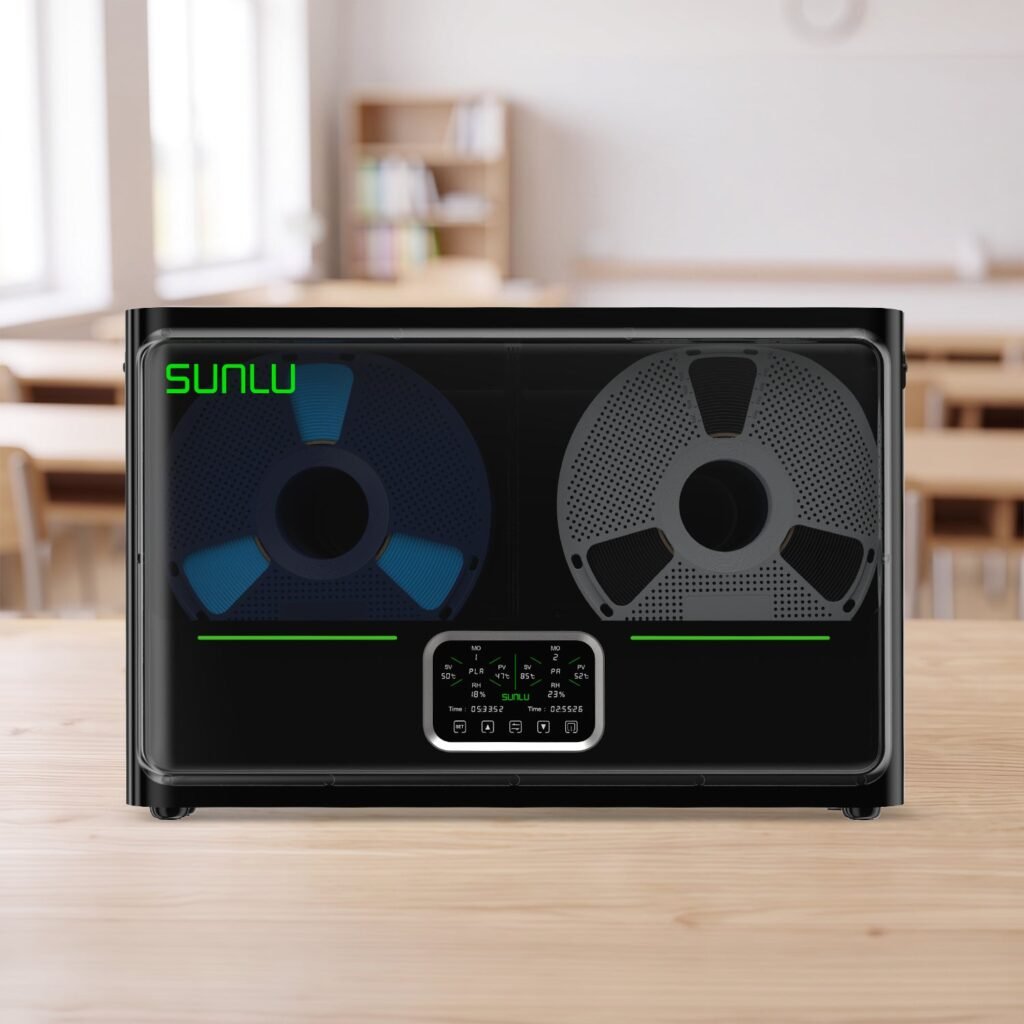
SUNLU FilaDryer S4 Pro
Paid link · price checked Sep 15, 2026
What we like
- +Two zones set to different temperatures
- +85 C claim reaches nylon range
- +Built-in annealing mode
- +Same four-spool footprint as the S4
What we don't
- −No independent temperature or noise measurement found
- −Costs $23 more than the S4
- −Highest rated power of the five (380 W)
- −Brand page we read shows no safety certification file number
Skip it if
You want measured proof of its heat before paying, or you only dry PLA and PETG.
The Practical Math · 3 years
| Purchase price (SUNLU store, Oct 23, 2026) | $139.99 |
| Electricity: 380 W rated x 1 hour per day x 365 x 3 years x $0.17 per kWh (assumes 1 hour per day at full rated power) | $70.74 |
| Total | $210.73 |
Best Value: Sovol SH02
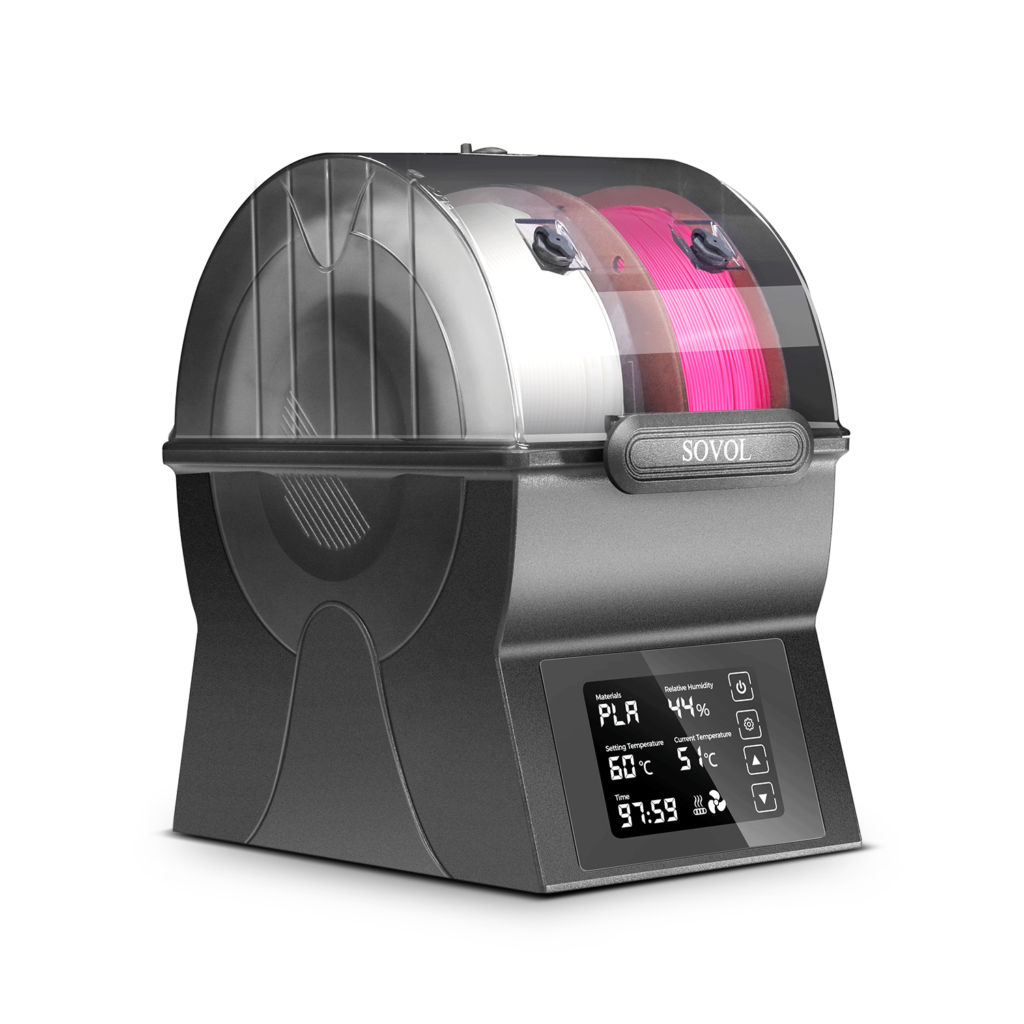
Sovol SH02
We don't earn anything from this link.
What we like
- +Lowest 3-year cost of the five
- +Sealed lid lets it double as storage, per Makers101
- +Spool rollers allow feeding while drying, per Makers101
- +Low 150 W draw
What we don't
- −Two spools only
- −70 C ceiling
- −Base can reach 62 C, per Makers101
- −Humidity readout not listed on the product page
Skip it if
You need to dry nylon or more than two spools at once.
The Practical Math · 3 years
| Purchase price (Sovol store, Oct 23, 2026) | $59.99 |
| Electricity: 150 W rated x 1 hour per day x 365 x 3 years x $0.17 per kWh (assumes 1 hour per day at full rated power) | $27.92 |
| Total | $87.91 |
Also Consider: Polymaker PolyDryer (Dock + Box)
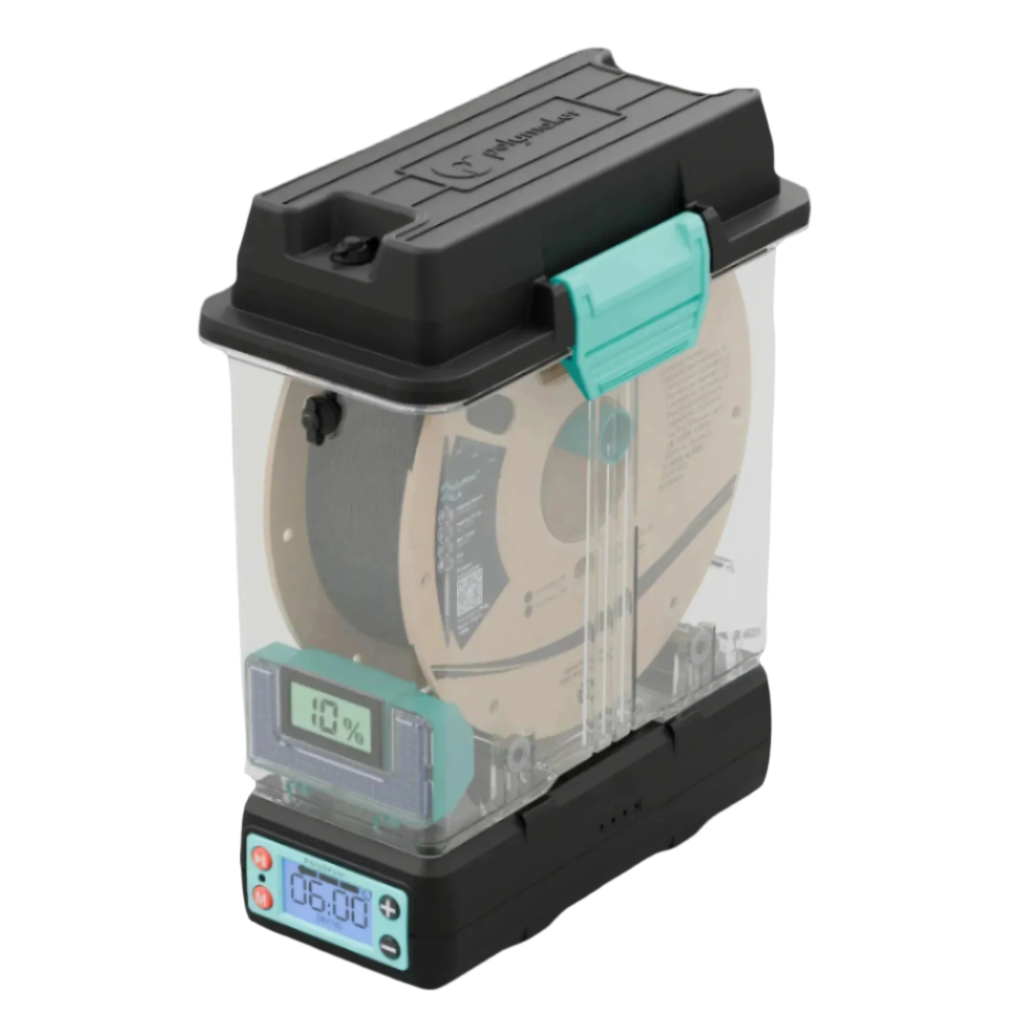
Polymaker PolyDryer (Dock + Box)
We don't earn anything from this link.
What we like
- +Airtight box doubles as storage
- +Low 68 W dock output
- +Add boxes for about $30 each
- +Continuous mode for printing while drying
What we don't
- −One spool per box
- −No temperature setting, only three power levels
- −No digital humidity display
- −Sealing figure comes from Polymaker only
Skip it if
You want to dry several spools at once or read exact temperature and humidity.
The Practical Math · 3 years
| Purchase price, Dryer Dock + Box (Polymaker store, Oct 23, 2026) | $79.99 |
| Electricity: 68 W dock output x 1 hour per day x 365 x 3 years x $0.17 per kWh (assumes 1 hour per day at full rated power) | $12.66 |
| Total | $92.65 |
What owners report
4.5 of 5 (Polymaker store widget) from 52 ratings on Polymaker store page (seller's own page); quotes from Reddit threads read Oct 23, 2026
Ratings shown on a seller's own page can leave out reviews the seller removed. We read the most recent reviews ourselves and summarize what repeats.
- +In an r/BambuLab thread, six commenters who say they own a SpacePi X4 recommend it, citing the 85 C ceiling, the isolated chambers and the presets. Only that one thread was read, so treat it as a pattern in one community, not a rate.
- −One complaint raised is price. In an r/3Dprinting thread the original poster asked why the SpacePi is worth about 50% more than an S4 and got no price-based answer from the commenters recommending it.
- −One X4 owner in that thread says it does not stay dry unless the automatic humidity cycle is switched on.
They can get hotter (85c vs 70c, useful if you ever print nylon), you can control two chambers separately for different material types, and it automatically ventilates, where the S4 doesn't.
r/BambuLab, owner of two SUNLU S4 units and one SpacePi X4, Dec 2025
The space pi x4 has the setting where it does a quick drying cycle automatically if the humidity goes above 20. It really doesn’t keep dry if that’s not on tho
r/3Dprinting, SpacePi X4 owner, May 2026
The specs that matter, in plain English
- PTC heater
- A heating element whose resistance rises as it warms, which limits its own peak temperature.
- Setpoint
- The temperature you dial in. The air or filament may read slightly different from it.
- Hygroscopic filament
- Filament such as nylon, PETG and TPU that absorbs moisture from the air and prints worse when wet.
- Annealing
- Heating a printed part below its melting point to relieve stress; some dryers offer a mode for it.
What changed
- Oct 13, 2026 First published.
- Oct 23, 2026 Prices and recalls re-checked.
Sources we read
- Creality US store: SpacePi X4 read Oct 23, 2026
- SUNLU FilaDryer S4 product page read Oct 23, 2026
- SUNLU FilaDryer S4 Pro product page read Oct 23, 2026
- Sovol SH02 product page read Oct 23, 2026
- Polymaker PolyDryer product page read Oct 23, 2026
- Polymaker PolyDryer FAQ and sealing test read Oct 23, 2026
- CPSC SaferProducts recall query: filament dryer read Oct 23, 2026
- CPSC SaferProducts recall query: Creality read Oct 23, 2026
- CPSC SaferProducts recall query: SUNLU read Oct 23, 2026
- CPSC SaferProducts recall query: Sovol read Oct 23, 2026
- CPSC SaferProducts recall query: Polymaker read Oct 23, 2026
- Makers101: best filament dryers (Jul 7, 2026, updated Sep 3, 2026) read Oct 23, 2026
- Makers101: SUNLU S4 filament dryer review read Oct 23, 2026
- The Phonograph: Creality SpacePi X4 review read Oct 23, 2026
- Gambody: SUNLU FilaDryer S4 review read Oct 23, 2026
- Creality Experts: SUNLU FilaDryer S4 review read Oct 23, 2026
- Reddit r/BambuLab: used Sunlu S4 or Creality Space Pi X4 read Oct 23, 2026
- Reddit r/3Dprinting: 4-spool dry box advice read Oct 23, 2026
We research products from published specs, certification databases, independent lab reports and owner reviews. We do not test products in our own lab. How we score.