The Best Ceiling Fans of 2026
| Product | Score | Airflow & efficiency (CFM, CFM/W)(30%) | Noise & motor(20%) | 3-Year Cost |
|---|---|---|---|---|
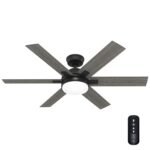 Hunter Georgetown 52 inBest Overall |
8.4 |
9.3/10 |
7.5/10 |
$246.37checked Sep 15, 2026 |
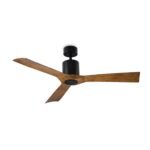 Modern Forms Aviator 54 inBest Value |
7.8 |
9.0/10 |
8.5/10 |
$690.16checked Sep 15, 2026 |
 Big Ass Fans Haiku L 52 inAlso Consider |
7.7 |
8.3/10 |
9.0/10 |
$948.89checked Sep 15, 2026 |
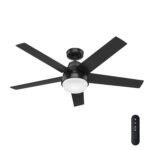 Hunter Aerodyne 52 inAlso Consider |
7.3 |
6.5/10 |
7.0/10 |
$341.47checked Sep 15, 2026 |
Sorted by score. Prices come from each seller's site on the date shown and change often.
Brand claim vs independent measurement
| Product | What the brand claims | Independent figure | Source |
|---|---|---|---|
| Hunter Georgetown 52 inAirflow efficiency (CFM/W) | 336 CFM/W (Hunter product page) | 326.3 CFM/W for the certified 52" Georgetown (model 52784, Fresh White) | ENERGY STAR Certified Ceiling Fans database |
| Hunter Georgetown 52 inPower draw at high speed | 11 W (Hunter product page and energy guide) | 20.6 W for the same certified model 52784 in the ENERGY STAR database | ENERGY STAR Certified Ceiling Fans database |
| Big Ass Fans Haiku L 52 inAirflow efficiency (CFM/W) | 269.0 CFM/W, ENERGY STAR weighted metric (Big Ass Fans spec sheet) | 269.0 CFM/W confirmed, matching the brand figure exactly | ENERGY STAR Certified Ceiling Fans database |
| Hunter Aerodyne 52 inAirflow efficiency (CFM/W) | 71 CFM/W (Hunter product page); Hunter's own site also lists this fan in its "ENERGY STAR ceiling fans" collection | No independent figure found. The ENERGY STAR certified database has no listing for the 52 in Aerodyne; only the 60 in Aerodyne (models 52832 and 52833) is certified. | ENERGY STAR Certified Ceiling Fans database (searched, no match for this model) |
| Modern Forms Aviator 54 inAirflow efficiency (CFM/W) | 252 CFM/W (Modern Forms spec sheet) | No independent figure found for this exact SKU. The ENERGY STAR database lists a related "Aviator 5 - 54 Flush" and a "70 Aviator," but not this standard, non-flush 54 in model. | ENERGY STAR Certified Ceiling Fans database (searched, no exact match) |
We do not run these tests ourselves. Independent figures are quoted from the source named in each row.
The Hunter Georgetown is the pick to buy first: it is ENERGY STAR certified at 336 CFM per watt, the most efficient fan of the four we checked, and at $229.99 it is also the cheapest. If you want more airflow for a large great room and do not mind paying more, the Modern Forms Aviator moves 6,800 CFM on high with app and voice control. If a quiet, ENERGY STAR-certified motor and a built-in occupancy sensor matter more than sticker price, the Big Ass Fans Haiku L is the one to shortlist. The Hunter Aerodyne rounds out the list as the budget smart-home option, though its own spec sheet shows it is the least efficient of the group.
All four are real, currently listed products from Hunter, Modern Forms, and Big Ass Fans, at four different price points from $229.99 to $899.00. Read on for how we picked, what to check before you buy, and answers to the questions we saw most often.
How we picked
We scored every fan on five weighted criteria: airflow and efficiency in CFM and CFM per watt (30%), noise and motor type (20%), controls and light kit (15%), installation and build (15%), and 3-year cost combining purchase price and estimated electricity (20%). These are researched picks: we read each brand’s own product and specification pages, the ENERGY STAR Certified Ceiling Fans database, and retailer listings, but we did not install or run any of these fans ourselves. See how we score for the full method.
What to look for
- Airflow efficiency (CFM per watt): ENERGY STAR requires at least 75 CFM/W across speeds. The fans on this list range from 71 to 336 CFM/W, so check this number before you check the price tag.
- Blade span for the room: 42 to 48 in fans suit rooms up to about 175 sq ft, 52 to 56 in fans suit rooms up to about 350 to 400 sq ft, and 60 in or larger is for great rooms.
- Motor speeds: a 6-speed DC motor, like the one in the Georgetown, gives finer control and pulls less power at every setting than an older 3 or 4-speed motor.
- Motor warranty: look for a lifetime motor warranty. Light kits are typically covered separately, anywhere from 1 to 5 years depending on the brand.
- Downrod length for your ceiling: most fans ship with a 3 to 5 in downrod sized for 8 to 9 ft ceilings. Taller ceilings need a longer downrod, usually sold as an accessory.
- Smart features, if you want them: WiFi or Bluetooth control with app and voice support typically adds $50 to $400 over a comparable remote-only fan.
FAQ
What size ceiling fan do I need for my room?
Match the blade span to square footage: 42 to 48 in for up to about 175 sq ft, 52 to 56 in for up to about 350 to 400 sq ft, and 60 in or larger for bigger rooms. The Hunter fans on this list are rated for rooms up to 400 sq ft at 52 in, while the Big Ass Fans Haiku L at the same 52 in span is rated for rooms up to 225 sq ft, so always check the manufacturer’s room-size rating rather than assuming blade span alone tells the whole story.
How many watts does a ceiling fan use?
It varies a lot by motor. Among the fans here, documented power draw ranges from 11 W (Hunter Georgetown) to 48 W (Hunter Aerodyne) at the speed each brand reports. A fan that draws 11 W instead of 48 W run 8 hours a day saves roughly $55 in electricity over three years at $0.17 per kWh.
Is a DC motor worth paying more for?
All four fans on this list use DC motors, which is now common even at lower price points because DC motors use less power per CFM than older AC motors and typically run quieter. The efficiency gap between them can still be large: Hunter’s own spec sheet lists 71 CFM/W for the Aerodyne against 336 CFM/W for the Georgetown, so a DC motor by itself does not guarantee top efficiency.
Can I install a ceiling fan without a downrod?
Some fans support a low-profile or flush mount for 8 ft ceilings, but none of the four fans reviewed here are sold as flush-mount models. Each ships with a short downrod, generally 3 to 5 in, intended for standard 8 to 9 ft ceilings, with longer downrods available separately for taller rooms.
Do ENERGY STAR ceiling fans actually save money?
Based on the specification sheets we read, yes, the savings show up directly in the electricity line of a 3-year cost estimate. The ENERGY STAR-certified Georgetown and Haiku L in this roundup both report lower per-hour power draw than the non-certified Aerodyne, which shows up as a meaningfully smaller electricity total over three years of daily use. For other rooms in the house that need moving air rather than a ceiling fixture, our best tower fans guide covers portable options, and our air and climate hub rounds up the rest of our cooling and air quality picks.
Best Overall: Hunter Georgetown 52 in
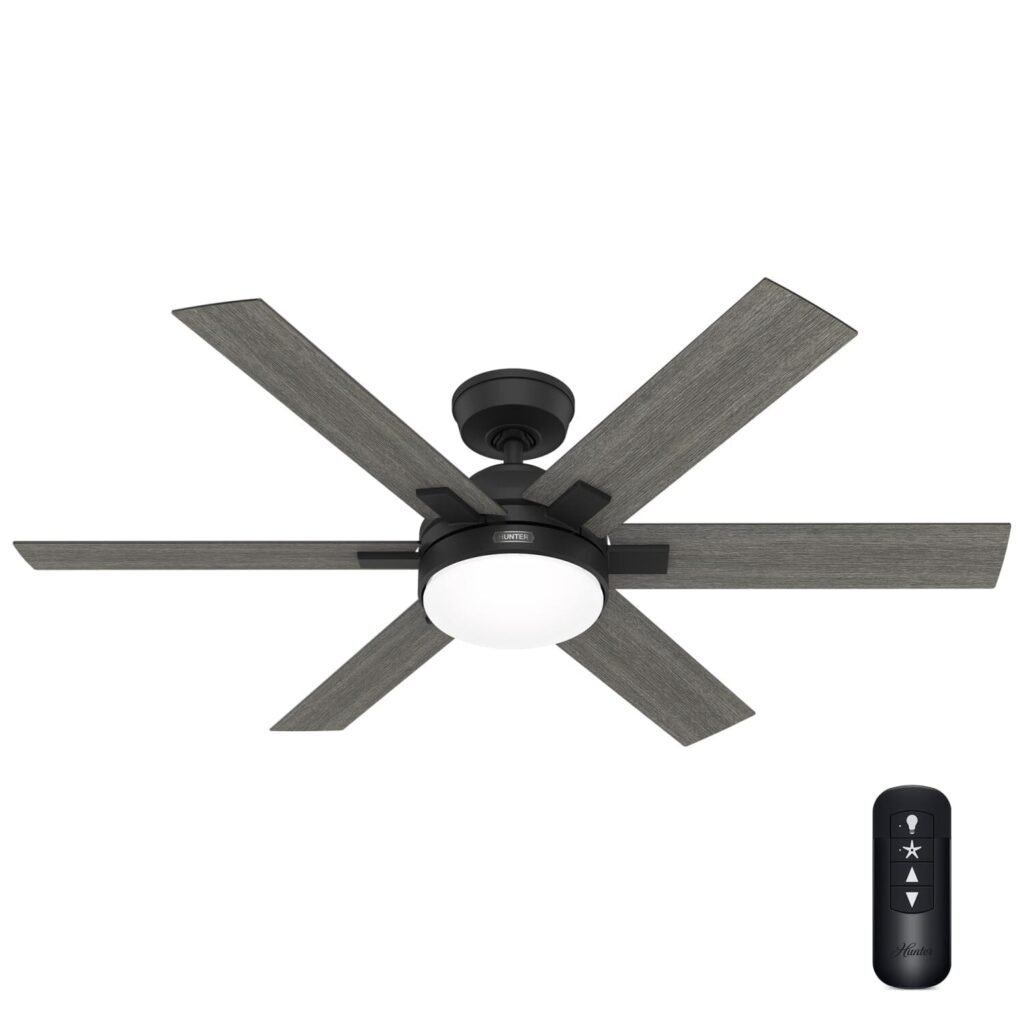
Hunter Georgetown 52 in
We don't earn anything from this link.
What we like
- +336 CFM per watt, the most efficient fan on this list and ENERGY STAR certified
- +Hunter's own energy guide lists an estimated $3 a year in electricity
- +HunterExpress pre-assembled body and plug and play wiring for a fast install
What we don't
- −Remote control only, no WiFi or voice control
- −Single fixed 3000K LED module rather than adjustable color temperature
- −This color option is listed as out of stock at the time of writing
Skip it if
Skip it if you want smart home or voice control built in, since the Georgetown ships with a remote only.
The Practical Math · 3 years
| Ceiling fan (Georgetown 52 in, Matte Black) | $229.99 |
| Electricity: 11W at high speed x 8 hrs/day x 365 days x 3 yrs x $0.17/kWh | $16.38 |
| Total | $246.37 |
Best Value: Modern Forms Aviator 54 in
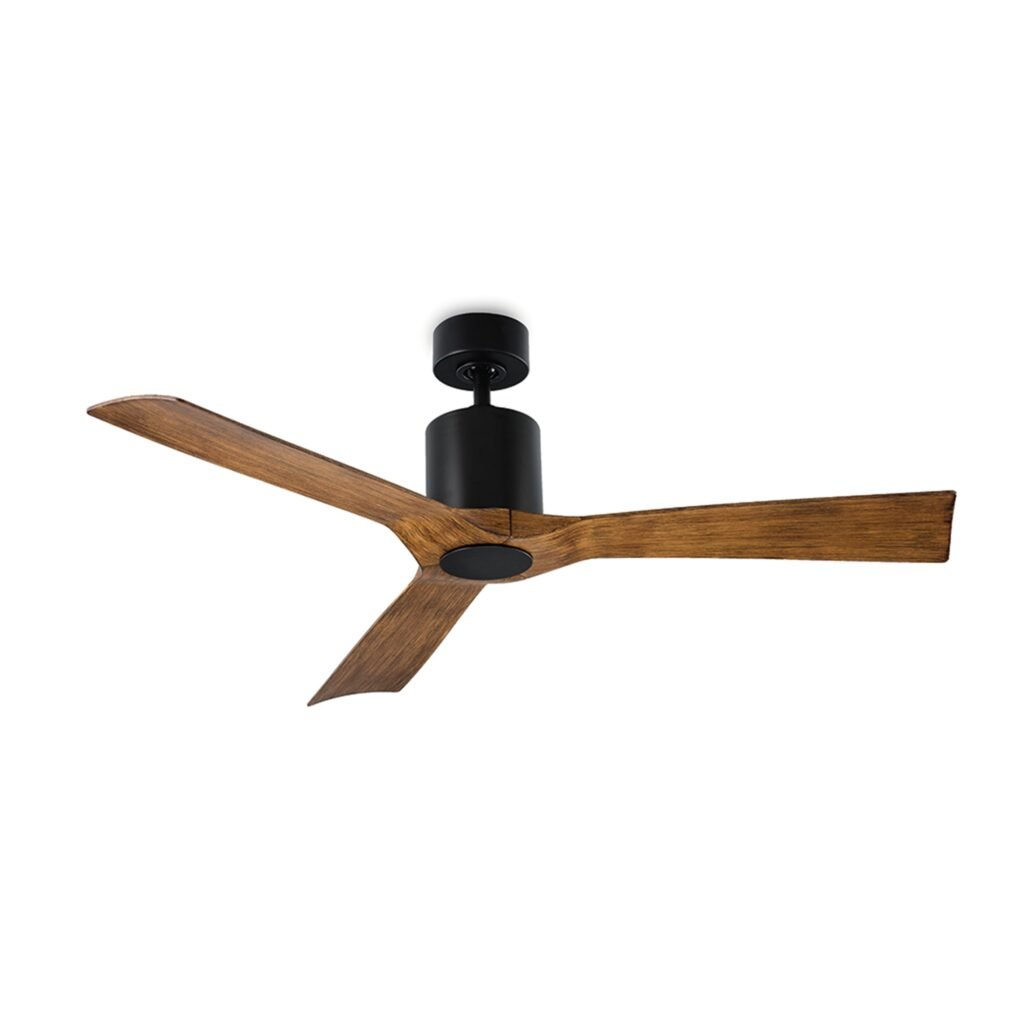
Modern Forms Aviator 54 in
We don't earn anything from this link.
What we like
- +6,800 CFM on high, the strongest airflow of the four fans here
- +Widest smart home compatibility of the group, including Control4 and Josh.ai
- +Modern Forms says every fan is factory balanced and sound tested before it ships
What we don't
- −LED light kit is sold separately, so the price above does not include lighting
- −Highest sticker price of the four fans reviewed
- −Listed as out of stock in this finish at the time of writing
Skip it if
Skip it if you want lights included in the box or if upfront price is the deciding factor.
The Practical Math · 3 years
| Ceiling fan (Aviator 54 in) | $649.95 |
| Electricity: 27W at high speed x 8 hrs/day x 365 days x 3 yrs x $0.17/kWh | $40.21 |
| Total | $690.16 |
Also Consider: Big Ass Fans Haiku L 52 in
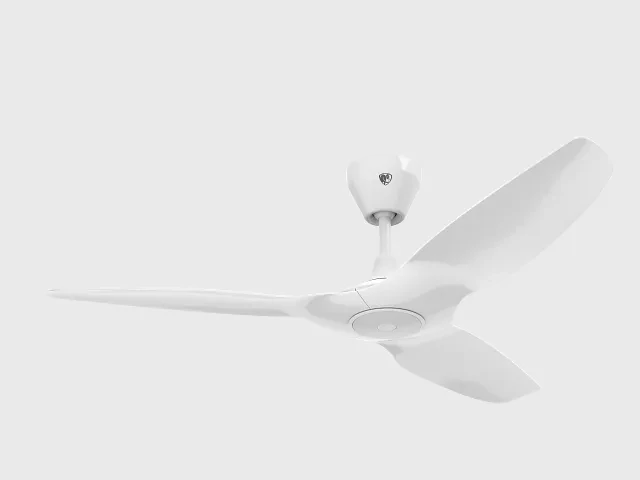
Big Ass Fans Haiku L 52 in
We don't earn anything from this link.
What we like
- +ENERGY STAR certified with a built-in occupancy sensor that can power the fan down automatically
- +Permanent-magnet DC motor built around quiet running
- +5 year residential warranty, the longest of the four fans here
What we don't
- −Highest 3-year cost of the group once purchase price and power draw are added up
- −225 sq ft room rating at 52 in is smaller than the 400 sq ft rating on the Hunter fans
- −ENERGY STAR lists a weighted CFM/W efficiency number but no single raw CFM figure
Skip it if
Skip it if your room is larger than 225 sq ft at this blade size, or if your budget is under $800.
The Practical Math · 3 years
| Ceiling fan (Haiku L 52 in) | $899.00 |
| Electricity: 33.5W at high speed x 8 hrs/day x 365 days x 3 yrs x $0.17/kWh | $49.89 |
| Total | $948.89 |
Also Consider: Hunter Aerodyne 52 in
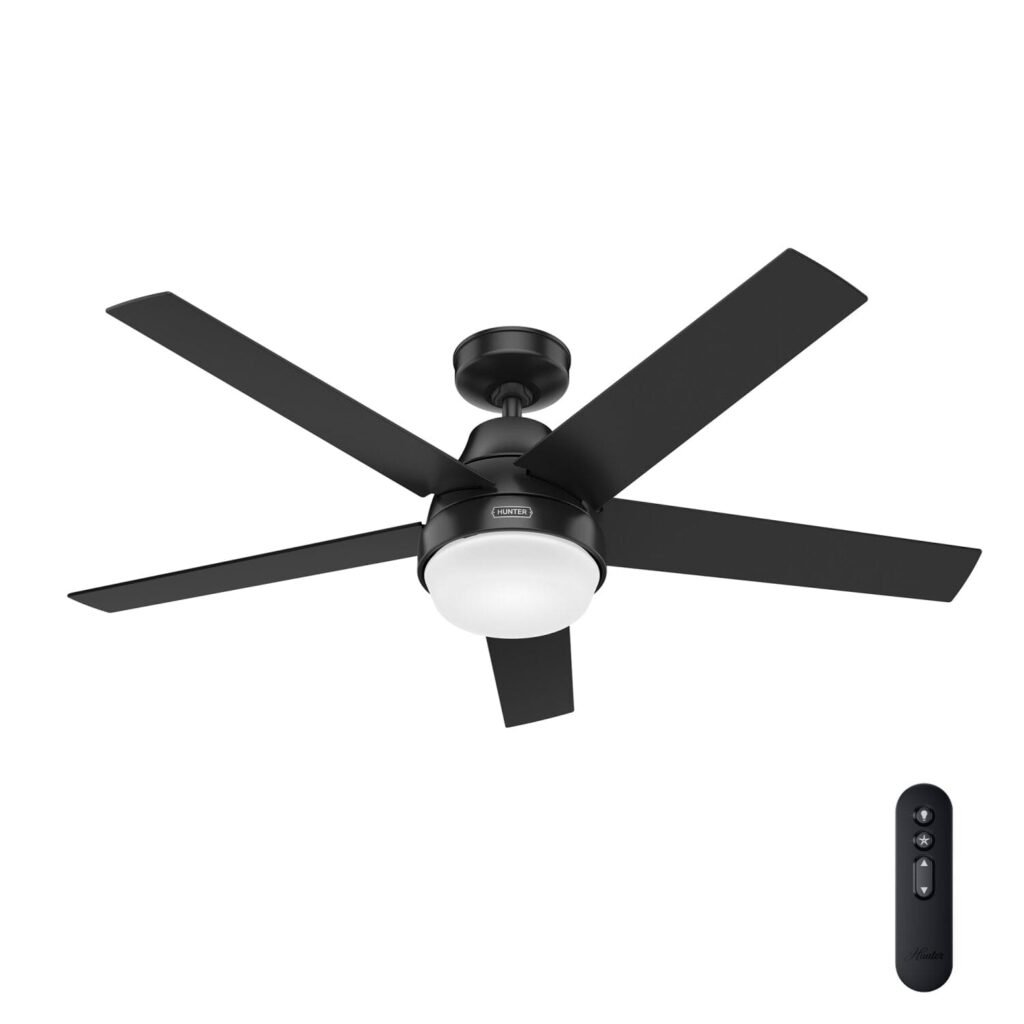
Hunter Aerodyne 52 in
We don't earn anything from this link.
What we like
- +HunterSMART WiFi works with Amazon Alexa, Google Home, and Apple HomeKit
- +5,218 CFM on high, rated for rooms up to 400 sq ft
- +Limited lifetime motor warranty
What we don't
- −71 CFM per watt, well below the efficiency of the other three fans in this roundup
- −Only 4 fan speeds versus 6 on the Georgetown
- −This color option is listed as out of stock at the time of writing
Skip it if
Skip it if a low power bill matters more to you than smart home control, since it is the least efficient fan on this list.
The Practical Math · 3 years
| Ceiling fan (Aerodyne 52 in, Matte Black) | $269.99 |
| Electricity: 48W at high speed x 8 hrs/day x 365 days x 3 yrs x $0.17/kWh | $71.48 |
| Total | $341.47 |
What owners report
4 of 5 from 23 ratings on Hunter's own store page (Georgetown 52 in, Matte Black) read Sep 16, 2026
Ratings shown on a seller's own page can leave out reviews the seller removed. We read the most recent reviews ourselves and summarize what repeats.
- −A repeated complaint on Hunter's own review widget is that the integrated LED glows orange or yellow instead of the white shown in Hunter's own product photos, and reviewers say Hunter support confirmed there is no other color option.
- −A second complaint theme is light output: at least one reviewer called the light too dim and noted the LED panel is integrated rather than a replaceable bulb, so it cannot be swapped for a brighter one.
- +5-star reviewers who tag the fan "Quiet" and "Met Expectations" say it moves a lot of air with little noise, though one added that the blades take extra effort to lock into place during setup.
The led when on is orange. In all the pictures and videos on your website shows white when the led is on. Called support and they told me it's would be yellow or orange and I had no other option
Hunter's own store page, Georgetown 52 in reviews, Sep 2026
Good fan blades are trouble some to get Locke in but once you get it they stay in place.
Hunter's own store page, Georgetown 52 in reviews, Jun 2026
The specs that matter, in plain English
- CFM/W (ceiling fan efficiency)
- Cubic feet of air moved per minute for every watt of electricity the motor draws. ENERGY STAR requires an average of at least 75 CFM/W across low, medium and high speed for a fan to qualify.
- Downrod
- The rod that connects the fan motor to the ceiling mount and sets how far the fan hangs down. Taller ceilings need a longer downrod so the blades still land at the recommended 8 to 9 ft above the floor.
- DC motor (ceiling fan)
- A motor built around direct-current electronics rather than the older AC design. DC motors typically use less power per CFM and offer more speed steps than AC motors of similar size.
- HunterExpress
- Hunter's name for a fan design with a pre-assembled motor housing, plug-and-play wiring and tool-free blades, built to cut a standard installation down to three steps.
- Occupancy sensor (ceiling fan)
- A sensor built into some smart fans, including the Big Ass Fans Haiku L, that can power the fan down automatically once a room has been empty for a set time to save electricity.
What changed
- Sep 16, 2026 Refreshed with evidence blocks: compared brand-claimed CFM/W and power draw against the ENERGY STAR certified-ceiling-fan database for the Georgetown and Haiku L, confirmed the 52 in Aerodyne and the standard Aviator 54 have no matching independent certification listing, queried the CPSC recall database for ceiling fans, added owner review themes and quotes read from Hunter's own store page, and added a glossary. Re-checked all four products are still sold and none is under a CPSC recall; prices unchanged from the last check.
Sources we read
- Hunter Georgetown 52 in HunterExpress product page and customer reviews read Sep 16, 2026
- Hunter Aerodyne 52 in product page read Sep 16, 2026
- Hunter ENERGY STAR ceiling fans collection read Sep 16, 2026
- Modern Forms Aviator 54 in ceiling fan listing, 2Modern read Sep 16, 2026
- Modern Forms Aviator 54 in product page read Sep 16, 2026
- Big Ass Fans Haiku L product page read Sep 16, 2026
- Big Ass Fans Haiku L 52 in listing, HVACDirect read Sep 16, 2026
- ENERGY STAR Certified Ceiling Fans database: Big Ass Fans Haiku L (FR127C-U1H) read Sep 16, 2026
- ENERGY STAR Certified Ceiling Fans database: Hunter 52" Georgetown (model 52784) read Sep 16, 2026
- ENERGY STAR Certified Ceiling Fans database: Hunter 60in Aerodyne (model 52833), confirming the 52 in Aerodyne is not the certified size read Sep 16, 2026
- ENERGY STAR Certified Ceiling Fans database: Modern Forms Aviator 5 - 54 Flush (a different SKU from the standard Aviator 54) read Sep 16, 2026
- CPSC SaferProducts.gov recall database, "ceiling fan" search read Sep 16, 2026
- ENERGY STAR Ceiling Fans program overview read Sep 16, 2026
We research products from published specs, certification databases, independent lab reports and owner reviews. We do not test products in our own lab. How we score.