Dyson vs Shark Cordless Vacuums: Which One Should You Buy?
| Product | Score | Cleaning(30%) | Runtime & battery(20%) | 3-Year Cost |
|---|---|---|---|---|
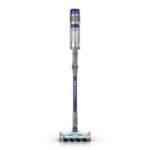 Shark PowerDetect (IP1251)Our Pick |
7.6 |
7.5/10 |
8.0/10 |
$437.98checked Sep 15, 2026 |
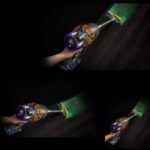 Dyson V15 DetectThe Alternative |
7.1 |
7.5/10 |
7.8/10 |
$949.98checked Sep 15, 2026 |
Sorted by score. Prices come from each seller's site on the date shown and change often.
The Shark PowerDetect (IP1251) scores higher overall once its lower price and longer runtime are weighed against the Dyson V15 Detect’s advantages, so it is the pick for most households on the numbers below. Choose the Dyson instead if a lighter body, a bigger dust bin and a faster recharge matter more to you than saving about $500.
| Attribute | Dyson V15 Detect | Shark PowerDetect (IP1251) |
|---|---|---|
| Price | $849.99 | $349.99 |
| Suction power | 240 Air Watts | 380 watts peak |
| Run time | Up to 60 minutes | Up to 70 minutes (ECO mode) |
| Charge time | 4.5 hours | 6 hours |
| Weight | 6.83 lbs | 8.11 lbs |
| Bin capacity | 0.77 L (0.2 gal) | 0.7 qt (0.66 L) |
| Filtration | HEPA, 99.99% to 0.3 microns | Felt + washable foam (pre-motor), HEPA (post-motor) |
| Warranty | 2 years limited | 5 years limited (2 years on parts) |
Dyson measures suction in Air Watts and Shark measures peak motor power in watts, so the two figures are not on the same scale and cannot be compared directly. Neither brand publishes results from an independent, brand-neutral cleaning test for these models, so this comparison scores cleaning performance evenly between the two and leans on runtime, weight, maintenance and cost, where the specs are directly comparable, to separate them.
Where the Dyson V15 Detect wins
The V15 Detect wins on bin size, recharge speed and weight. Dyson’s own product page calls its bin “supersized” at 0.2 gallons (0.77 L) with a no-touch ejection mechanism, and that is larger than the Shark’s 0.7 qt (0.66 L) cup, so you empty it less often. A full recharge takes 4.5 hours, versus 6 hours for the Shark, so it is back on the dock and ready sooner. The battery is also swappable: a tool-free Click-in battery, sold on dyson.com for $99.99, pops out in one motion if you want a spare or a replacement once the original wears down. At 6.83 lbs, the machine is about 1.3 lbs lighter than the Shark, which matters most on stairs and when the wand is over your head on curtains or ceiling fans. The Fluffy Optic cleaner head, in Dyson’s words, “illuminates invisible dust” on hard floors, and a sensor built into the inlet counts particles by size and shows the tally on the machine’s screen. Filtration is also tighter on paper: Dyson’s whole-machine HEPA system is rated to trap 99.99% of particles down to 0.3 microns.
Where the Shark PowerDetect wins
The PowerDetect wins on runtime, warranty length and price. Shark rates the IP1251 at up to 70 minutes in ECO mode, a full 10 minutes longer than the Dyson’s 60-minute maximum, so it is more likely to finish a whole-house clean on a single charge. The DuoClean Detect nozzle uses two brushrolls and picks up debris moving forward and in reverse. Shark’s own product listing describes the sensor system this way: “Dirt Detect, Edge Detect, Floor Detect, and Direction Detect technologies all work to boost power to increase cleaning up to 75% when carpet and dirt is detected” (source). Shark backs the machine with a 5-year limited warranty (2 years on parts), more than double Dyson’s 2-year term. And at $349.99, it costs $500 less than the V15 Detect before either buyer even adds a spare battery.
What’s in the box
The V15 Detect ships with a wall-mounted docking station, the Digital Motorbar and Fluffy Optic cleaner heads, a mini motorized tool for upholstery and stairs, a crevice tool and a charger. The PowerDetect ships with the DuoClean Detect nozzle, a crevice tool and its MultiFLEX wand, which bends at the middle so the head can slide flat under a sofa or bed without you bending down. Neither box includes a second battery, so run time per charge is capped at whatever a single battery gives you unless you buy a spare.
Dyson vs Shark: how the brands compare beyond these two models
Searches for “dyson vs shark” are usually about the brands as a whole, not only these two machines, so here is how they stack up at that level. On dyson.com, cordless stick vacuums run from about $469.99 for the V8 Extra up to $849.99 for the V15 Detect, and Dyson’s newest flagship, the V16 Piston Animal, currently lists at that same $849.99 on dyson.com. Shark’s cordless stick lineup on sharkninja.com runs from $199.99 for the Freestyle Max up to $429.99 for the PowerDetect Speed, with self-emptying Clean and Empty systems reaching $549.99. Warranty length is the clearest brand-level gap: Dyson lists a 2-year limited warranty on its current cordless machines, including both the V15 Detect and the V16 Piston Animal, while Shark lists a 5-year limited warranty (2 years on parts) on the PowerDetect line. Both brands sell separate, user-swappable batteries rather than sealing one in: Dyson’s Click-in battery ($99.99) releases with one button and fits the V11, V15 Detect and V15s Detect Submarine, and Shark’s battery pack ($87.99) is a similar tool-free swap that covers the IP1000 and IP3000 series, including the PowerDetect. In short, Dyson’s strength is the top of its range, lighter machines and faster recharging, and Shark’s strength is price and warranty coverage across a wider spread of models.
Choose the Dyson V15 Detect if
- You want the lightest wand available for overhead cleaning or carrying up and down stairs.
- You want the bigger 0.77 L bin so you empty it less often.
- You want the faster 4.5-hour recharge and don’t mind paying about $500 more.
Choose the Shark PowerDetect if
- You want the lower price and the longer 5-year warranty.
- You’d rather charge once and cover more floor per charge.
- You don’t need Dyson-specific accessories or the fastest possible recharge.
FAQ
Which vacuum should most people buy, the Dyson or the Shark?
On the weighted scoring used in this guide, the Shark PowerDetect comes out ahead, mainly on price and runtime. The Dyson V15 Detect still wins on weight, bin size and recharge speed, so it is worth the extra cost if those specific things matter to your routine.
Which one is better for pet hair?
Both ship with brush heads built around pet hair. Dyson’s Digital Motorbar has an anti-tangle comb that clears hair from the bar as you clean, and Shark’s DuoClean Detect nozzle uses a second brushroll plus reverse-direction cleaning to pull hair out of carpet fibers. For a wider set of pet-hair options at different price points, see our best vacuums for pet hair guide.
How long does each vacuum actually run per charge?
Dyson lists 60 minutes as the maximum, reached in the lowest power mode. Shark lists up to 70 minutes in ECO mode. Both numbers drop in Boost or MAX mode, so treat the headline figures as best-case numbers for light floors, not the setting you would run on thick carpet.
Do either of these need a subscription or regular filter purchases?
No. Both machines use washable filters, felt and foam on the Shark, a sealed HEPA unit on the Dyson, that the brand expects you to rinse and air-dry rather than replace on a schedule. The main added cost over 3 years is a battery: this guide’s cost estimate assumes one replacement Click-in battery ($99.99) for the Dyson and one replacement battery pack ($87.99) for the Shark, since cordless vacuum batteries typically wear down before year three under regular use.
Where can I compare more cordless models before deciding?
If you want a wider field than just these two, our best cordless vacuums roundup ranks more picks the same way, using the weighting explained on how we score.
Our Pick: Shark PowerDetect (IP1251)
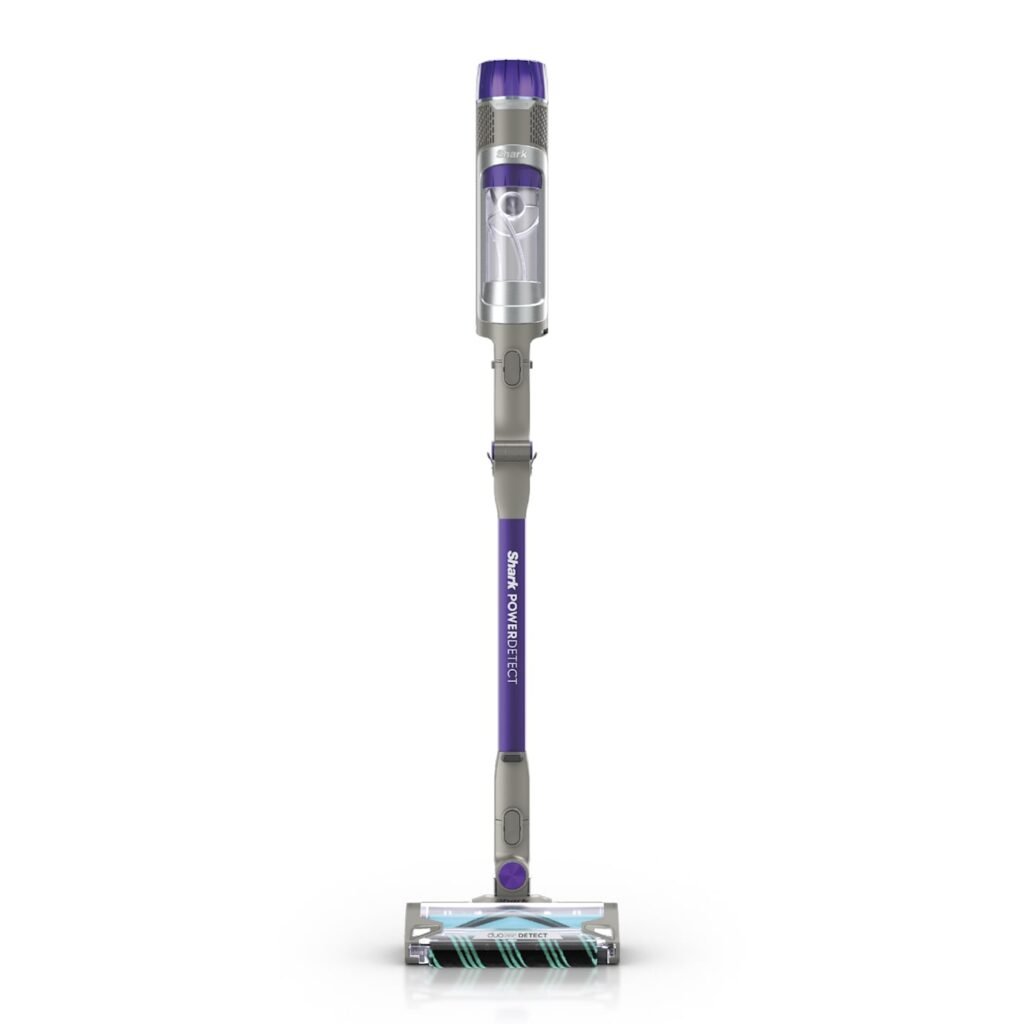
Shark PowerDetect (IP1251)
We don't earn anything from this link.
What we like
- +Rated 70-minute run time in ECO mode covers more floor per charge
- +DuoClean Detect nozzle cleans in forward and reverse with dirt-detecting sensors
- +5-year limited warranty is the longest of the two, and it costs $500 less than the Dyson
What we don't
- −At 8.11 lbs it's noticeably heavier to hold overhead than the Dyson
- −0.7 qt (0.66 L) dust cup is smaller than the Dyson's 0.77 L bin, so it needs emptying more often
- −6-hour full recharge is longer than the Dyson's 4.5-hour charge time
Skip it if
Skip the PowerDetect if you want the lightest possible wand, the fastest recharge or the biggest dust bin, since the Dyson beats it on all three.
The Practical Math · 3 years
| Shark PowerDetect vacuum | $349.99 |
| Battery pack replacement, one swap assumed in year 3, sharkninja.com $87.99 | $87.99 |
| Total | $437.98 |
The Alternative: Dyson V15 Detect
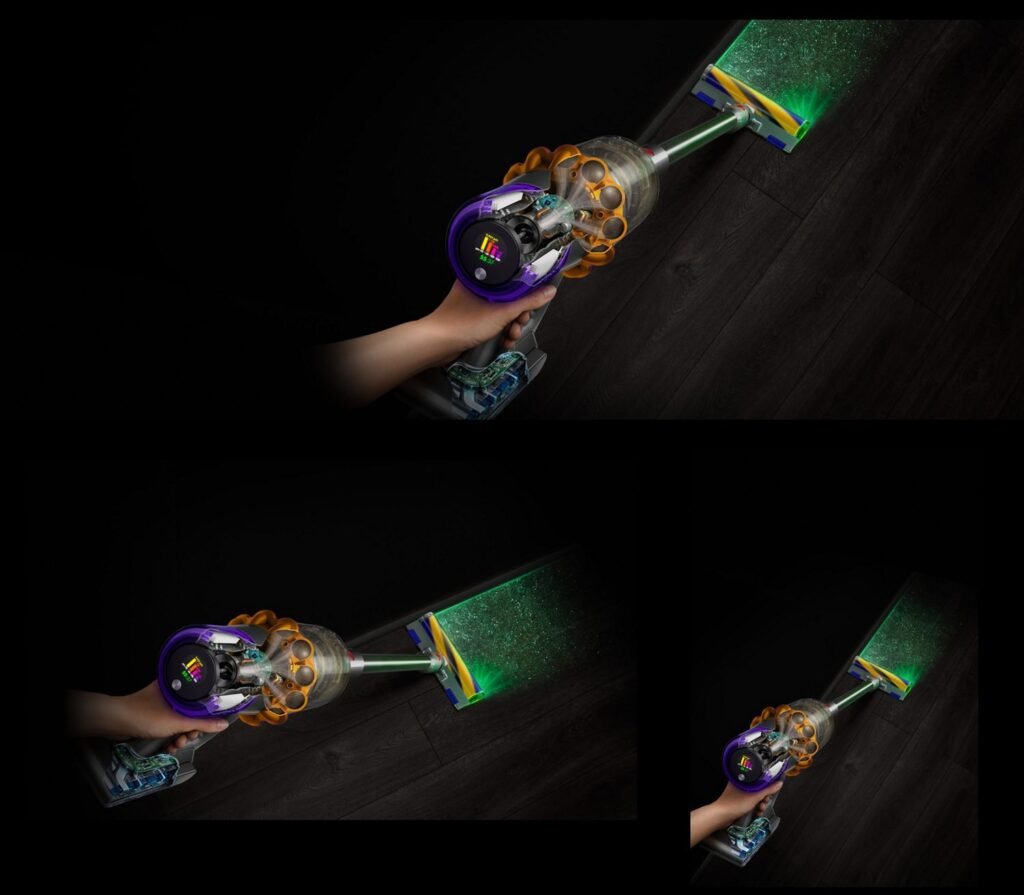
Dyson V15 Detect
We don't earn anything from this link.
What we like
- +6.83 lb body is about 1.3 lb lighter than the Shark, easier to hold overhead on stairs and ceilings
- +0.77 L (0.2 gal) bin is bigger than the Shark's 0.7 qt cup, so it needs emptying less often
- +4.5-hour recharge is faster than the Shark's 6-hour charge time, and the Click-in battery swaps out in one motion for $99.99
What we don't
- −Costs about $500 more than the PowerDetect before adding a spare battery
- −60-minute maximum run time is 10 minutes shorter than the Shark's rated ECO-mode runtime
- −2-year limited warranty is shorter than Shark's 5-year term
Skip it if
Skip the V15 Detect if $849.99 is more than double your budget, or if a longer warranty and longer runtime per charge matter more to you than a lighter body.
The Practical Math · 3 years
| Dyson V15 Detect vacuum | $849.99 |
| Click-in battery replacement, one swap assumed in year 3, dyson.com $99.99 | $99.99 |
| Total | $949.98 |