The Best Portable Air Conditioners of 2026
| Product | Score | Cooling vs room size (SACC BTU)(30%) | Energy efficiency (CEER)(20%) | 3-Year Cost |
|---|---|---|---|---|
| 9.1 |
9.0/10 |
9.5/10 |
$1,015.68checked Sep 15, 2026 | |
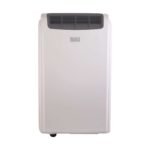 BPACT14WT Smart Portable Air ConditionerAlso Consider |
6.2 |
8.5/10 |
5.5/10 |
$1,285.41checked Sep 15, 2026 |
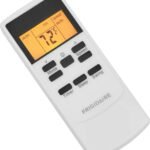 FHPC102AC1 3-in-1 Portable Room Air ConditionerAlso Consider |
6.2 |
6.0/10 |
4.5/10 |
$955.93checked Sep 15, 2026 |
| 6.0 |
7.0/10 |
6.0/10 |
$1,186.47checked Sep 15, 2026 |
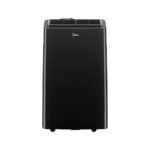
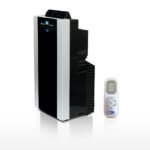
Sorted by score. Prices come from each seller's site on the date shown and change often.
Brand claim vs independent measurement
| Product | What the brand claims | Independent figure | Source |
|---|---|---|---|
| Midea Duo MAP14S1TBLCooling efficiency (CEER) | Midea's marketing page does not print a single CEER number, it only calls the Duo an 'inverter' design | 13.8 CEER, $68 estimated yearly electricity cost, verified directly from the federal EnergyGuide label PDF for this exact model | U.S. DOE/FTC EnergyGuide label |
| Frigidaire FHPC102AC1Cooling efficiency (CEER) | 6.7 CEER listed as a spec on Frigidaire's own product page | 6.7 CEER, $95 estimated yearly electricity cost, matching the figure on the federally mandated EnergyGuide label PDF for this exact model | U.S. DOE/FTC EnergyGuide label |
| Black+Decker BPACT14WTCooling efficiency (CEER) | 7.9 CEER listed on Black+Decker's own product page and on its Walmart listing | No independently published EnergyGuide PDF or third-party lab figure could be located for this model. Black+Decker's own site routes manuals through a support-ticket portal rather than a public PDF, so this number is confirmed only by the brand and retailer, not by an independent source | Black+Decker product page |
| Whynter ARC-14SHCooling capacity, ASHRAE vs SACC | 14,000 BTU (ASHRAE), the larger number printed first on the box | 9,200 BTU SACC, the DOE-mandated 'as installed with hose' rating that Whynter also publishes on its own spec sheet, about 34 percent lower than the ASHRAE figure | Whynter product specifications (DOE SACC methodology) |
| Whynter ARC-14SHIndependent lab coverage | Not applicable, Whynter does not publish a CEER number for this model | RTINGS has tested the closely related Whynter ARC-14S (the non-heat version of this unit) but not the ARC-14SH itself, and the measured noise and cooling figures for that sibling model sit behind RTINGS' paid membership, so no independent number is publicly available for either model | RTINGS |
| Midea Duo MAP14S1TBLIndependent lab coverage | Not applicable | RTINGS has tested the related Midea Duo MAP12S1TBL (a lower-capacity sibling in the same Duo line) but not the MAP14S1TBL used in this guide, and its measured dB and BTU figures require a paid RTINGS membership to view, so no independent number is publicly available for the MAP14S1TBL | RTINGS |
We do not run these tests ourselves. Independent figures are quoted from the source named in each row.
If your room runs up to about 550 square feet and you want the quietest unit here with the lowest power bill, get the Midea Duo MAP14S1TBL. Midea’s own federal EnergyGuide label puts it at a 13.8 Combined Energy Efficiency Ratio, the highest of any unit in this guide, and it runs at 42 dBA, quiet enough to sit a few feet from a headboard. It also uses a dual, hose-in-hose design that Midea says keeps hot exhaust air separate from the cool air it pulls back in.
If your space runs closer to 700 square feet, the Black+Decker BPACT14WT covers the most ground on paper of the single-hose units here. Want heat as well as cooling once the seasons turn, or want a second hose pulling in outside air instead of already-cooled room air, look at the Whynter ARC-14SH. On a tight budget in a small bedroom, the Frigidaire FHPC102AC1 lists for less than any other pick in this guide.
How we picked these portable air conditioners
Every unit here is scored 0 to 10 on five weighted criteria: cooling power for the room size measured in SACC BTU (30 percent), energy efficiency measured by CEER (20 percent), noise (20 percent), setup and window kit (10 percent), and estimated 3-year electricity cost (20 percent). Full method at how we score.
We pulled specs and pricing from each brand’s own product page and federal EnergyGuide label first, and from Walmart or Amazon listings when a spec was not published on the brand’s own site. These are researched picks built from published specs and manufacturer data, not units we bought and tested side by side in person.
What to look for in a portable air conditioner
- Shop by SACC BTU, not the bigger ASHRAE number. Every box lists two cooling numbers. ASHRAE is the older rating measured with no hose attached. SACC (Seasonally Adjusted Cooling Capacity) is the newer rating that accounts for the warm air a hose pulls back into the room, so it always reads lower, often by a quarter or more. A box marked “14,000 BTU (ASHRAE) / 10,000 BTU (SACC)” will cool your room like a 10,000 BTU unit, not a 14,000 BTU one.
- Check the CEER number, not just the BTU count. Combined Energy Efficiency Ratio is cooling BTU per watt of power. A CEER in the 6.5 to 8 range is typical for a single-hose unit; Midea’s 13.8 CEER on the Duo, backed by its own inverter compressor, is well above that range and shows up directly as a lower power bill.
- Aim for 52 dB or under in a bedroom. That is roughly the level of a quiet home office. The Black+Decker’s 54 dB rating is fine for a living room but noticeable overnight next to a bed.
- Measure your window before you buy a window kit. Most kits are built for double-hung or sliding windows and extend to a published maximum width, typically in the 20 to 49 inch range. A casement or crank-style window may need a different kit than the one in the box.
- Decide if you actually need dual hose. A dual-hose unit like the Midea Duo or Whynter ARC-14SH draws intake air from outside instead of the room, which helps it recover faster after a door opens. It also means fitting two hose collars into your window kit instead of one, so installation takes a little longer.
- Weigh the unit and its casters. These four run 62 to 75 pounds. If you plan to roll it between rooms by season, confirm it has four caster wheels, not two, before you buy.
Running a portable AC also pulls moisture out of the air as a side effect. If damp air is your main complaint in a basement or laundry room instead of heat, our best dehumidifiers guide covers units built specifically for that job.
FAQ
What is the difference between SACC and ASHRAE BTU ratings?
ASHRAE is the older cooling rating, measured in a lab with the unit run without a hose attached. SACC, short for Seasonally Adjusted Cooling Capacity, is the newer rating brands must also publish, and it accounts for warm air a single hose pulls back into the room as it exhausts. SACC numbers read lower than ASHRAE numbers for the same unit, so size your room against the SACC figure, not the larger ASHRAE one printed first on most boxes.
How much does it cost to run a portable air conditioner for a summer?
Based on the wattage or EnergyGuide label for each unit in this guide, running 8 hours a day for about 4 summer months a year at $0.17 per kWh works out to roughly $119 a year for the most efficient pick here and about $228 a year for the least efficient. Check the cost box on each product above for the full 3-year total and the exact assumption behind it.
Do I need a dual-hose portable air conditioner?
Only if your room struggles to recover temperature after the door opens and closes often, or you want heat as well as cooling from the same unit, like the Whynter ARC-14SH’s 13,000 BTU heat mode. For a bedroom you close up and cool overnight, a single-hose unit like the Frigidaire or Black+Decker installs faster and costs less up front.
What size portable AC do I need for my room?
Match the SACC BTU rating on the box to your room’s square footage, not the higher ASHRAE number. A small bedroom around 250 square feet, like what the Frigidaire FHPC102AC1 is rated for, needs far less cooling power than an open living room near 700 square feet, which is closer to what the Black+Decker BPACT14WT is rated to cover. Rooms with tall ceilings, lots of west-facing glass, or a second-floor location generally need more capacity than the square footage alone suggests.
Can I install a portable air conditioner without a window?
No. Every unit in this guide vents hot air through a hose that has to terminate somewhere outside the room, typically through a window kit, though some installs use a wall port or drop-ceiling tile instead. If you have no window or exterior access at all, a portable unit will not work, and you would need a different type of cooling system such as a ductless mini-split.
Best Overall: Duo MAP14S1TBL Smart Inverter Portable Air Conditioner
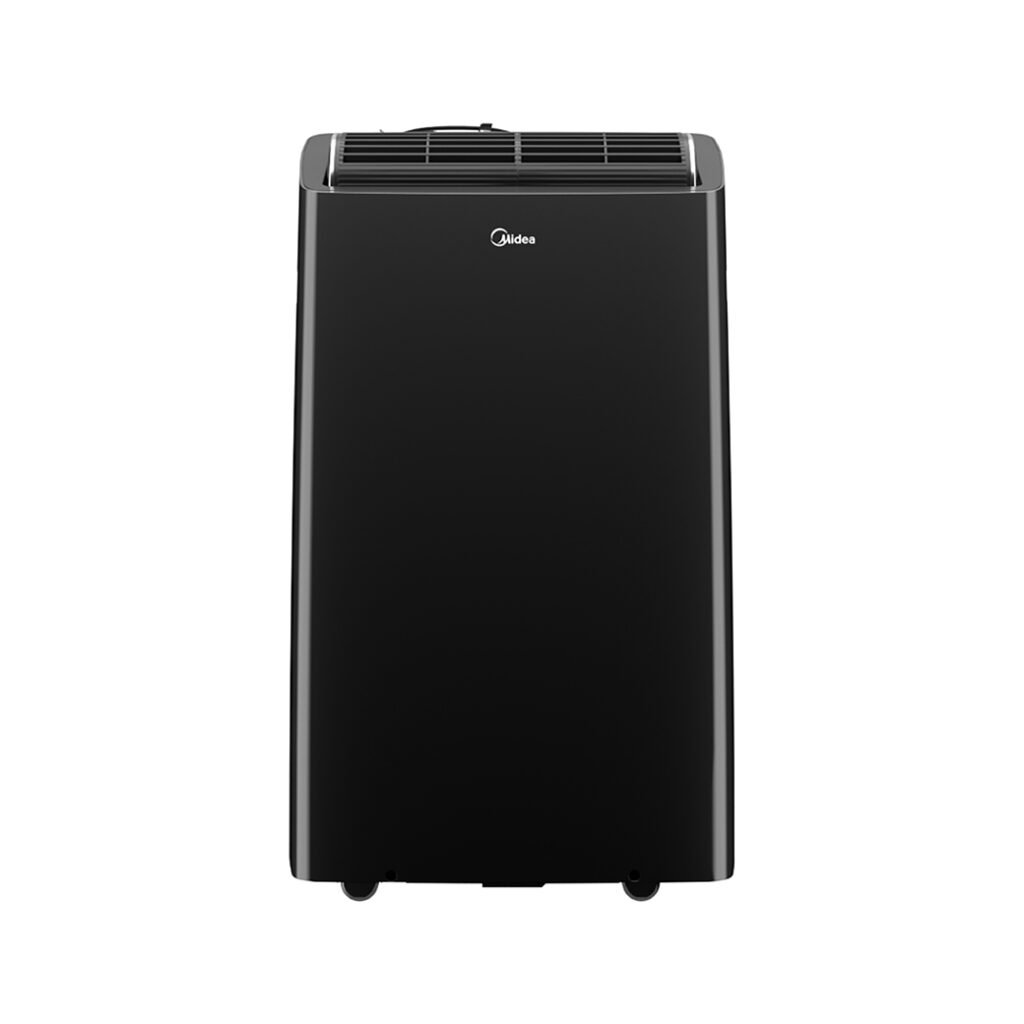
Duo MAP14S1TBL Smart Inverter Portable Air Conditioner
We don't earn anything from this link.
What we like
- +Highest CEER in this guide at 13.8, well above typical single-hose units
- +Quietest unit tested here at 42 dBA
- +Largest stated room coverage at up to 550 sq ft SACC
- +Reusable, washable filter with no replacement cost
What we don't
- −Highest sticker price in this guide at $659.99
- −Dual, hose-in-hose kit takes longer to fit into a window than a single hose
- −Midea does not publish a wattage or amperage spec sheet, only the EnergyGuide dollar estimate
Skip it if
Skip it if you want the simplest single-hose install or a unit under $500.
The Practical Math · 3 years
| Portable air conditioner (MAP14S1TBL) | $659.99 |
| Electricity: Midea's EnergyGuide basis ($68/yr at 8 hrs/day, 3-month season, $0.13/kWh) rescaled to 4 summer months (120 days) at $0.17/kWh, x3 years | $355.69 |
| Total | $1,015.68 |
Also Consider: BPACT14WT Smart Portable Air Conditioner
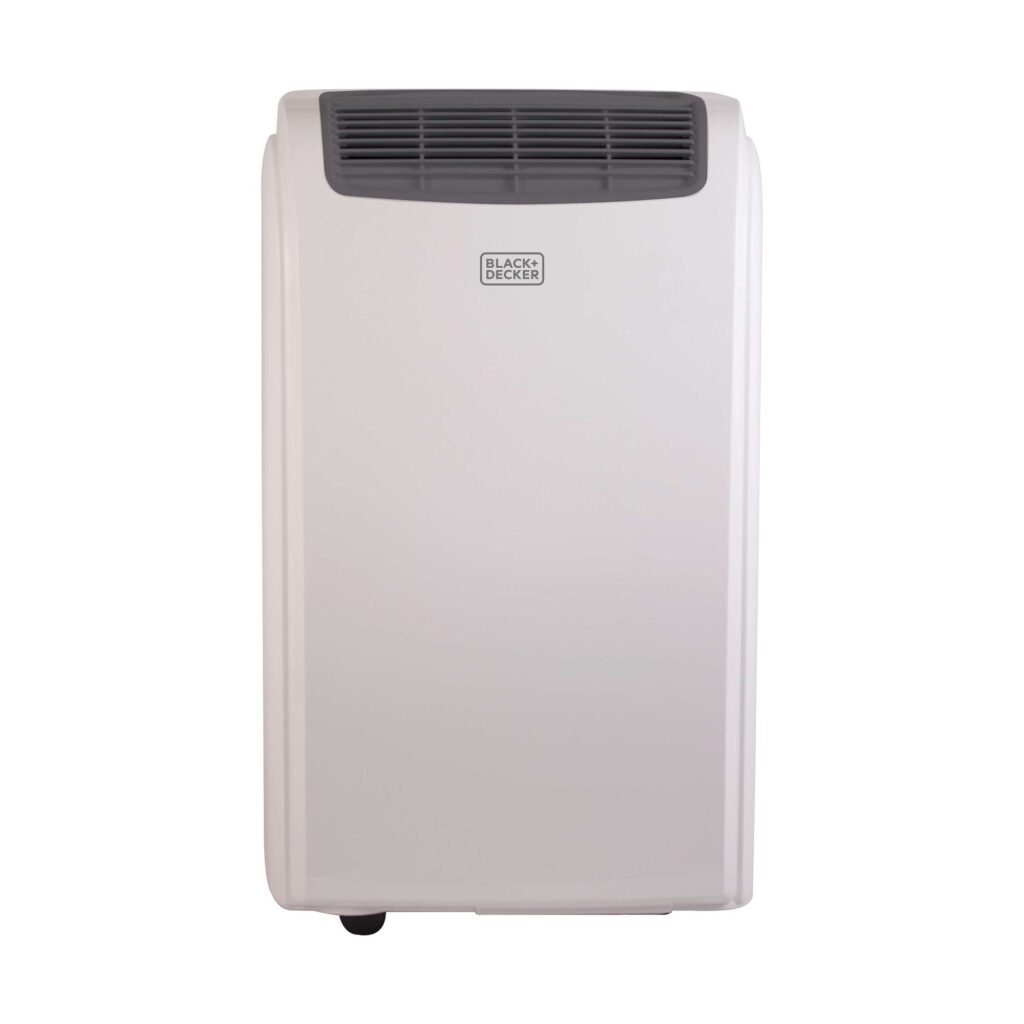
BPACT14WT Smart Portable Air Conditioner
We don't earn anything from this link.
What we like
- +Largest stated room coverage in this guide at up to 700 sq ft
- +5-year compressor warranty, longer than the rest of this lineup
- +Straightforward single-hose install with casters and side carry handles
- +Washable filter, no filter subscription
What we don't
- −Loudest unit in this guide, no published dB figure from Black+Decker but 54 dB per its Amazon listing
- −Lowest CEER-to-price value here, so it costs the most to run over 3 years
- −1,400W draw is the highest of the four units in this guide
Skip it if
Skip it if noise matters in a bedroom or home office, or if you run the AC most of the day, since the electric bill adds up fastest here.
The Practical Math · 3 years
| Portable air conditioner (BPACT14WT) | $599.97 |
| Electricity: 1,400W x 8 hrs/day x 120 days (4 summer months) x $0.17/kWh, x3 years | $685.44 |
| Total | $1,285.41 |
Also Consider: FHPC102AC1 3-in-1 Portable Room Air Conditioner
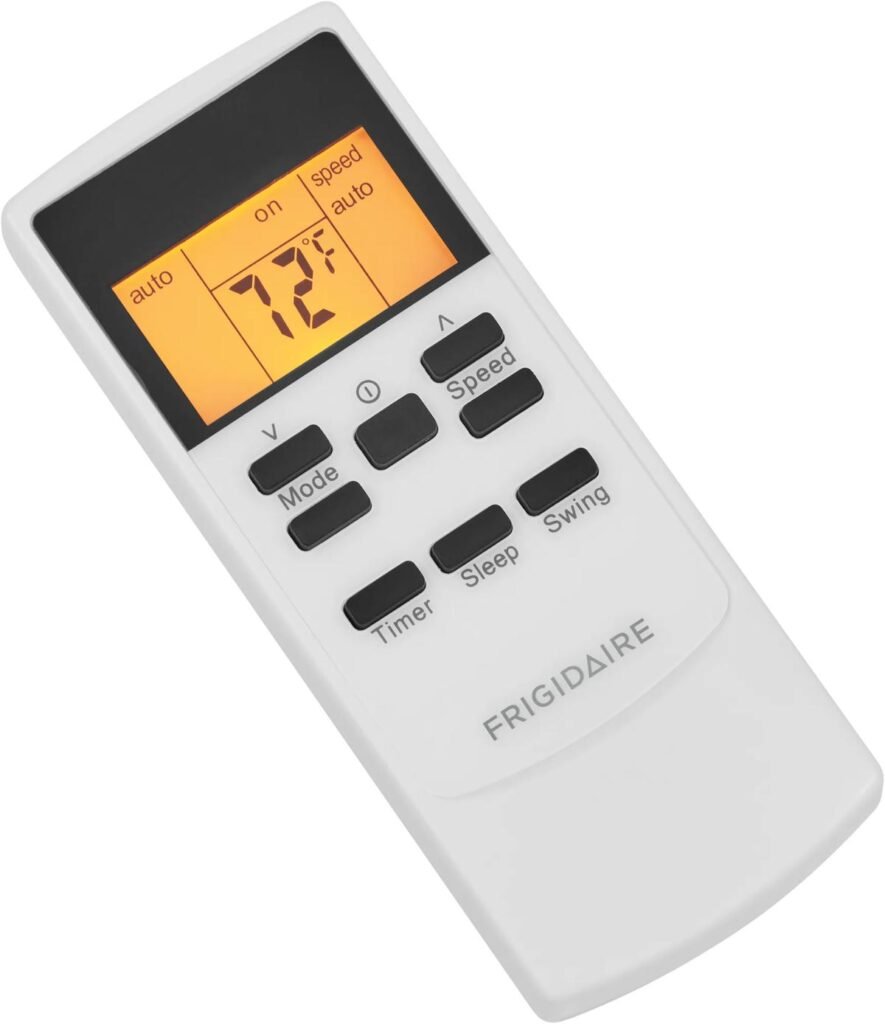
FHPC102AC1 3-in-1 Portable Room Air Conditioner
We don't earn anything from this link.
What we like
- +Lowest price in this guide at $459 direct from Frigidaire, and often under $400 at retailers
- +Compact 16.5" x 14" footprint suits a small bedroom
- +Low-profile window kit Frigidaire says installs in seconds with no tools
- +Built-in clean air ionizer and washable dust filter
What we don't
- −Smallest coverage claim in this guide at 151 to 250 sq ft
- −Lowest CEER of the four units here at 6.7
- −Not ENERGY STAR certified, per Frigidaire's own spec page
Skip it if
Skip it if your room is over 250 sq ft or you specifically want an ENERGY STAR-certified unit.
The Practical Math · 3 years
| Portable air conditioner (FHPC102AC1) | $459.00 |
| Electricity: Frigidaire's EnergyGuide basis ($95/yr at 8 hrs/day, 3-month season, $0.13/kWh) rescaled to 4 summer months (120 days) at $0.17/kWh, x3 years | $496.93 |
| Total | $955.93 |
Also Consider: ARC-14SH Dual Hose Portable Air Conditioner and Heater
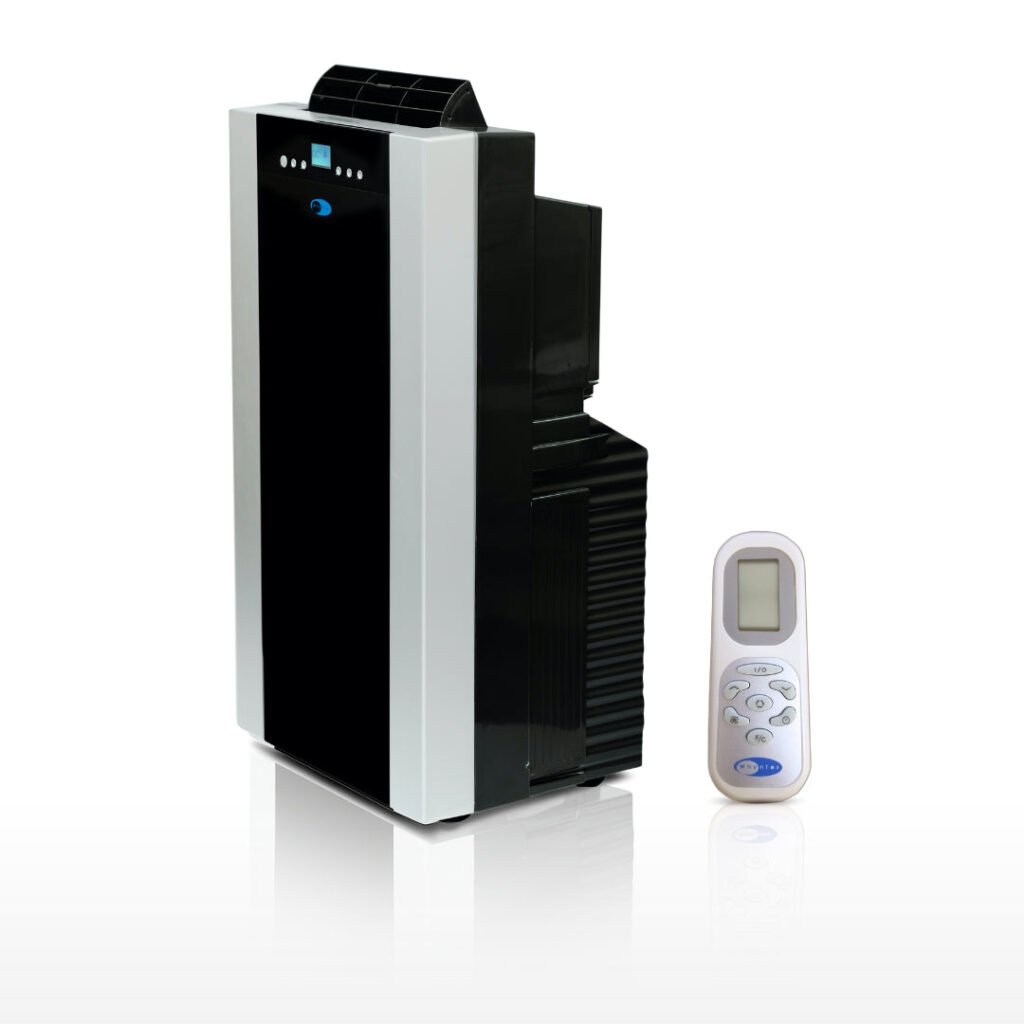
ARC-14SH Dual Hose Portable Air Conditioner and Heater
We don't earn anything from this link.
What we like
- +Only unit in this guide with a heat mode (13,000 BTU ASHRAE) for cool spring and fall days
- +Dual-hose intake draws from outside instead of recirculating room air
- +Activated carbon filter in addition to a washable pre-filter
- +3-year compressor warranty
What we don't
- −Whynter does not publish a CEER number for this model
- −Two hoses mean two collars to fit into the window kit instead of one
- −Lowest SACC BTU per square foot of coverage in this guide
Skip it if
Skip it if you only need cooling and do not want to pay for heat-mode hardware you will not use.
The Practical Math · 3 years
| Portable air conditioner (ARC-14SH) | $549.99 |
| Electricity: 1,300W x 8 hrs/day x 120 days (4 summer months) x $0.17/kWh, x3 years | $636.48 |
| Total | $1,186.47 |
What owners report
4.75 of 5 from 4 ratings on Whynter store page (seller's own product listing) read Sep 16, 2026
Ratings shown on a seller's own page can leave out reviews the seller removed. We read the most recent reviews ourselves and summarize what repeats.
- +Quiet operation shows up in more than one review, with reviewers linking it directly to better sleep in the room it cools.
- +Several reviewers single out strong cooling power, including one household that bought three units for two different floors.
So far it is great, really quiet, cools the room with ease, very nice looking case.
Whynter store page (shopwhynter.com), date not shown on page, read Sep 16, 2026
This 14,00 BTU portable air conditioner exceeded our greatest expectations. We now own three of these eco-friendly units on two separate floors and couldn't be happier.
Whynter store page (shopwhynter.com), date not shown on page, read Sep 16, 2026
The specs that matter, in plain English
- CEER
- Combined Energy Efficiency Ratio, the cooling BTU a unit produces per watt of power it draws, printed on the federal EnergyGuide label. Higher means cheaper to run.
- SACC
- Seasonally Adjusted Cooling Capacity, the DOE-mandated 'as installed with hose' cooling rating. It reads lower than the ASHRAE number printed next to it because it accounts for warm air the hose pulls back into the room.
- EnergyGuide label
- The yellow tag required by U.S. law on new appliances, showing an estimated yearly energy cost and, for air conditioners, the CEER. It is the manufacturer's legally required disclosure, tested to a federal DOE procedure.
- Dual hose (hose-in-hose)
- A portable AC design with two hoses, one pulling in outside air for the compressor and one exhausting hot air, instead of pulling intake air from the room itself like a single-hose unit.
What changed
- Sep 16, 2026 Refreshed with evidence blocks: added measured brand-claim-vs-independent comparisons for all 4 picks, an owner-review block sourced from a seller page with dated verbatim quotes, a CPSC recall check across all 4 brands (no matches), a glossary, and a sourced reference list. Rechecked that all 4 picks are still sold and none is recalled; prices, specs and scores unchanged from the prior version.
Sources we read
- Midea Duo MAP14S1TBL product page read Sep 16, 2026
- Midea MAP14S1TBL federal EnergyGuide label (PDF) read Sep 16, 2026
- Black+Decker BPACT14WT product page read Sep 16, 2026
- Black+Decker BPACT14WT listing, Walmart read Sep 16, 2026
- Black+Decker BPACT14WT listing, Amazon read Sep 16, 2026
- Whynter ARC-14SH product page and customer reviews read Sep 16, 2026
- Frigidaire FHPC102AC1 product page read Sep 16, 2026
- Frigidaire FHPC102AC1 federal EnergyGuide label (PDF) read Sep 16, 2026
- CPSC SaferProducts.gov recall database query: portable air conditioner read Sep 16, 2026
- RTINGS review page, Midea Duo MAP12S1TBL (sibling model) read Sep 16, 2026
- RTINGS review page, Whynter ARC-14S (sibling model) read Sep 16, 2026
We research products from published specs, certification databases, independent lab reports and owner reviews. We do not test products in our own lab. How we score.