The Best Projectors of 2026
| Product | Score | Brightness & picture(30%) | Throw & setup(20%) | 3-Year Cost |
|---|---|---|---|---|
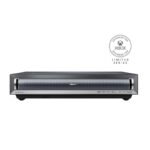 Hisense PX3-ProBest Overall |
8.3 |
8.3/10 |
9.5/10 |
$3,139.60checked Sep 15, 2026 |
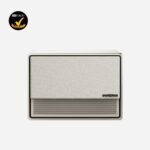 XGIMI Horizon UltraBest Value |
8.1 |
6.5/10 |
8.8/10 |
$1,166.54checked Sep 15, 2026 |
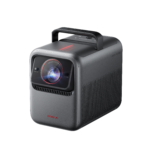 Anker Nebula X1Also Consider |
7.8 |
7.8/10 |
8.7/10 |
$3,069.92checked Sep 15, 2026 |
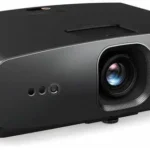 BenQ W2720iAlso Consider |
6.8 |
7.0/10 |
6.5/10 |
$1,960.95checked Sep 15, 2026 |
Sorted by score. Prices come from each seller's site on the date shown and change often.
Brand claim vs independent measurement
| Product | What the brand claims | Independent figure | Source |
|---|---|---|---|
| Hisense PX3-ProPeak brightness in the brightest picture mode | 3,000 ANSI lumens (Hisense spec sheet) | 2,669 ANSI lumens measured by ProjectorCentral in HDR Vivid mode, an 11% shortfall the reviewer notes is within the 20% tolerance the ISO 21118 lumen standard allows | ProjectorCentral |
| XGIMI Horizon UltraPeak brightness in a color-accurate picture mode | 2,300 ISO lumens (XGIMI spec sheet) | 1,199 ANSI lumens measured by Projector Reviews in Movie mode, the projector's most color-accurate setting; XGIMI's own High Power mode measured closer to claim at 2,335 ANSI lumens but sacrifices color accuracy and runs the fans noticeably louder | Projector Reviews |
| Anker Nebula X1Peak brightness in its brightest accurate picture mode | 3,500 ANSI lumens (Anker spec sheet) | 2,588 ANSI lumens measured by ProjectorCentral in Standard SDR mode, about 26% under Anker's claim; the reviewer notes up to 25% below claim is a typical result for this style of measurement | ProjectorCentral |
| BenQ W2720iPeak brightness in its accurate User picture mode | 2,500 ANSI lumens (BenQ spec sheet) | 1,595 ANSI lumens measured by ProjectorCentral in User mode, 36% under BenQ's claim; the same unit measured 2,704 ANSI lumens in Bright mode, which the reviewer flagged for a strong green color bias | ProjectorCentral |
We do not run these tests ourselves. Independent figures are quoted from the source named in each row.
The Hisense PX3-Pro is the projector to buy first if you want one box that covers picture, sound, and smart TV without extra cables. It is an ultra short throw laser projector that sits inches from the wall, throws a 100 to 120 inch image most living rooms can fit, and carries a 50W Harman Kardon speaker system loud enough to skip a soundbar for casual viewing. Hisense rates it at 3,000 ANSI lumens; ProjectorCentral’s lab measured 2,669 ANSI lumens in the brightest picture mode, 11% under the claim but still inside the 20% tolerance the ISO 21118 lumen standard allows. At $2,999.99 direct from Hisense, it scores highest of the four projectors below on our weighted rubric, just ahead of the XGIMI Horizon Ultra.
Buyers on a tight budget should start with the XGIMI Horizon Ultra, which XGIMI currently sells for $999 against its $1,699.99 list price and pairs Android TV with two 12W Harman Kardon speakers built in. Anyone who wants the brightest raw measured picture among the projectors under $3,000 here should look at the Anker Nebula X1 ($2,999.00): ProjectorCentral measured 2,588 ANSI lumens in its brightest accurate picture mode, ahead of the BenQ and XGIMI units in this guide. Sports and gaming fans who watch mostly after dark and do not mind adding an external streaming stick should consider the BenQ W2720i ($1,799.00 at Newegg), the only 4LED-lit projector on this list.
How we picked
We scored each projector on five weighted criteria: brightness and picture accuracy (30%), throw and setup (20%), built-in audio (10%), smart features (20%), and 3-year cost to own (20%).
For prices and specs, we read each brand’s own US store: XGIMI’s product page for the Horizon Ultra, Soundcore’s page for the Nebula X1, and Hisense’s shop for the PX3-Pro. BenQ’s own W2720i spec page does not display a live price, so we priced that unit at Newegg, an authorized US retailer, instead. For independent brightness measurements, we read ProjectorCentral’s lab reviews and spec pages for the W2720i, Nebula X1, and PX3-Pro, and Projector Reviews’ lab review of the Horizon Ultra; both outlets project each unit onto a calibrated screen and read the result with a light meter rather than repeating the brand’s number. We queried the CPSC recall database at saferproducts.gov for “projector” before ranking anything; it lists a 2026 recall for the BenQ GV31 portable projector over a lithium battery fire risk, a different model from the W2720i in this guide, so none of the four picks below are affected. These picks come from published specs and named third-party lab measurements, not from testing in our own lab. See how we score for the full method.
What to look for
- Treat the lumens on the box as a ceiling, not a promise. Every projector in this guide measured lower on an independent light meter than its marketing number: ProjectorCentral read the Hisense PX3-Pro at 2,669 ANSI lumens against a 3,000 ANSI lumen claim, an 11% gap, while Projector Reviews read the XGIMI Horizon Ultra at 1,199 ANSI lumens in its most color-accurate mode against a 2,300 ISO lumen claim, a much bigger gap.
- Match the throw ratio to your room, not the other way around. A throw ratio at or under 0.3:1, like the PX3-Pro’s 0.22:1, means the projector sits inches from the wall; a ratio of 1.0 to 1.5:1, like the other three projectors here, needs roughly 8 to 17 feet of room depth for a 100-inch image.
- Add up the built-in speaker wattage before you plan on skipping a soundbar. 10W total, like the BenQ W2720i’s dual 5W drivers, is fine for casual daytime viewing; 40W or more, like the Nebula X1’s paired 15W and 5W drivers or the PX3-Pro’s 50W Harman Kardon system, can fill a living room on its own.
- Check whether the smart platform is built in or a separate dongle. The Horizon Ultra, Nebula X1, and PX3-Pro all run their smart TV software from the same board as the projector; the W2720i ships its Android TV software on a separate QS02 puck that plugs into an HDMI port, which is one more remote and one more boot cycle.
- Ask how many hours a day you will actually run it. Our 3-year cost math below assumes 3 hours a day; double that to 6 hours a day and the electricity line for every projector here roughly doubles too, since none of these four use a replaceable lamp within a normal 3-year window.
- Search the recall list by product type before you buy. None of the four projectors in this guide were on the CPSC recall list as of Sep 16, 2026, though a different BenQ model, the GV31 portable, was recalled in July 2026 for a battery fire risk.
FAQ
Is ANSI lumens the same as ISO lumens?
Not exactly, though the two are meant to track closely. ANSI lumens is the older, more commonly independently measured brightness standard; ISO 21118, the standard XGIMI prints on the Horizon Ultra’s 2,300 ISO lumen rating, is a newer method that allows for a measurement tolerance of about 20% versus a comparable ANSI figure. Either way, treat the number on the box as a manufacturer claim until a named tester remeasures it, the way ProjectorCentral and Projector Reviews did for the four projectors in this guide.
Which of these projectors needs the least setup work?
The Hisense PX3-Pro. Its 0.22:1 throw ratio is an ultra short throw design, so the unit sits on a low console inches from the wall instead of needing a ceiling mount or a shelf 10 or more feet back, which is what the XGIMI Horizon Ultra, Anker Nebula X1, and BenQ W2720i all need for their 1.0-and-up throw ratios.
Do I need a special screen for an ultra short throw projector?
You can point the PX3-Pro at a plain wall, but Hisense’s own bundles pair it with an ambient light rejecting (ALR) screen, because UST light hits the screen at a steep angle that a standard white wall or screen scatters unevenly. Budget for that screen separately; it is not included in the $2,999.99 price we checked on Hisense’s store. For a side-by-side against flat-panel TVs instead, see our TVs and home theater guide.
Which projector is cheapest to run over 3 years?
The XGIMI Horizon Ultra, by our math: its $999 current price plus an estimated $167.54 in electricity over 3 years, at an assumed 3 hours a day and $0.17 per kWh, comes to about $1,166.54 total, the lowest of the four projectors here even before accounting for its discount off list price.
Are any of these projectors under recall?
No. We queried the CPSC recall database at saferproducts.gov for “projector” on Sep 16, 2026 and found one open recall relevant to a brand in this guide: the BenQ GV31 portable projector, recalled in July 2026 for a lithium battery fire and burn risk. That is a different model from the BenQ W2720i recommended here, and none of the four projectors in this guide appear on the recall list.
Best Overall: Hisense PX3-Pro
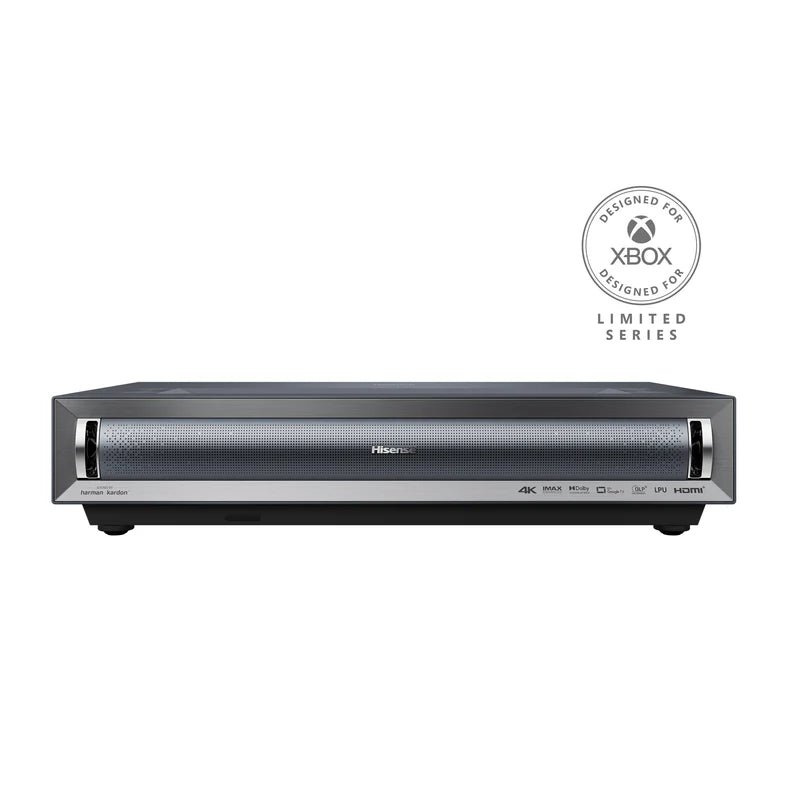
Hisense PX3-Pro
We don't earn anything from this link.
What we like
- +50W Harman Kardon speaker system is loud enough for most living rooms without a separate soundbar
- +0.22:1 ultra short throw ratio means it sits on a console inches from the wall instead of needing a ceiling mount
- +ProjectorCentral measured 2,669 ANSI lumens against Hisense's 3,000 ANSI lumen claim, an 11% gap that is the smallest of the four projectors in this guide
What we don't
- −At $2,999.99 it is close to the most expensive projector in this guide, alongside the Anker Nebula X1
- −Ultra short throw geometry works best with an ALR screen, which Hisense sells separately from the projector
- −19.8 lbs and a wall-hugging placement make it the least portable projector here
Skip it if
Skip it if you want to move the projector between rooms or take it outside, since its ultra short throw geometry and weight tie it to one fixed spot near a wall.
The Practical Math · 3 years
| Projector (Hisense PX3-Pro) | $2,999.99 |
| Electricity at an assumed 3 hours/day, 250W rated draw per ProjectorCentral's spec table, 3 years, $0.17/kWh | $139.61 |
| Light source replacement (RGB triple laser, rated 25,000+ hours; not needed within about 3,285 hours of use at the assumed rate) | $0.00 |
| Total | $3,139.60 |
Best Value: XGIMI Horizon Ultra
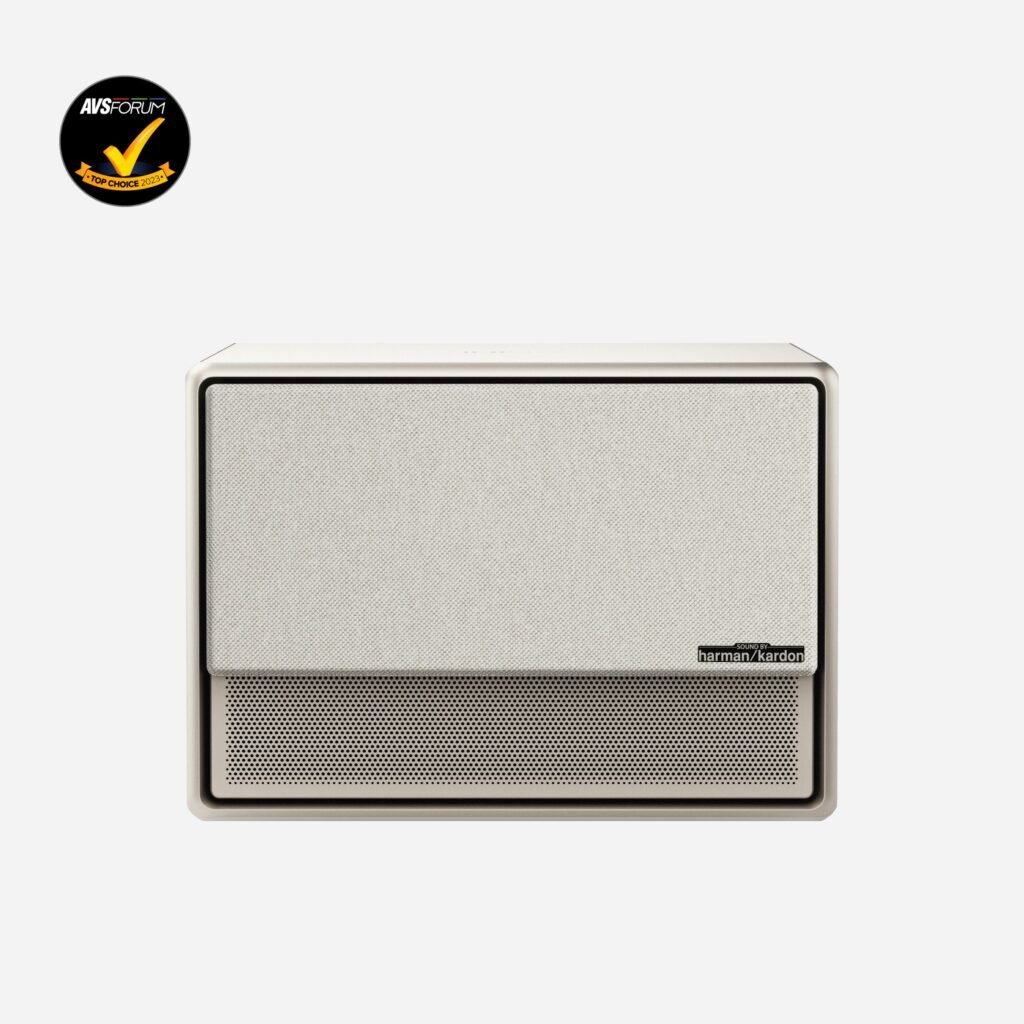
XGIMI Horizon Ultra
We don't earn anything from this link.
What we like
- +At $999 on XGIMI's own store, it is the cheapest projector in this guide by a wide margin
- +Android TV 11 and Chromecast are built into the unit, with no separate streaming dongle to plug in
- +Dual 12W Harman Kardon speakers with DTS Studio Sound are built in
What we don't
- −Projector Reviews measured only 1,199 ANSI lumens in the color-accurate Movie mode, the largest gap from a brand's brightness claim of any projector in this guide
- −Reaching close to XGIMI's 2,300 ISO lumen claim requires the noisier, less color-accurate High Power mode
- −Two of the five most recent reviews on XGIMI's own product page mention hardware hiccups on long sessions
Skip it if
Skip it if accurate, bright color in a mixed-light room matters more than price, since its measured brightness in an accurate picture mode trails every other projector here.
The Practical Math · 3 years
| Projector (XGIMI Horizon Ultra) | $999.00 |
| Electricity at an assumed 3 hours/day, 300W rated draw per ProjectorCentral's spec table, 3 years, $0.17/kWh | $167.54 |
| Light source replacement (Dual Light LED plus laser; not needed within about 3,285 hours of use at the assumed rate) | $0.00 |
| Total | $1,166.54 |
Also Consider: Anker Nebula X1
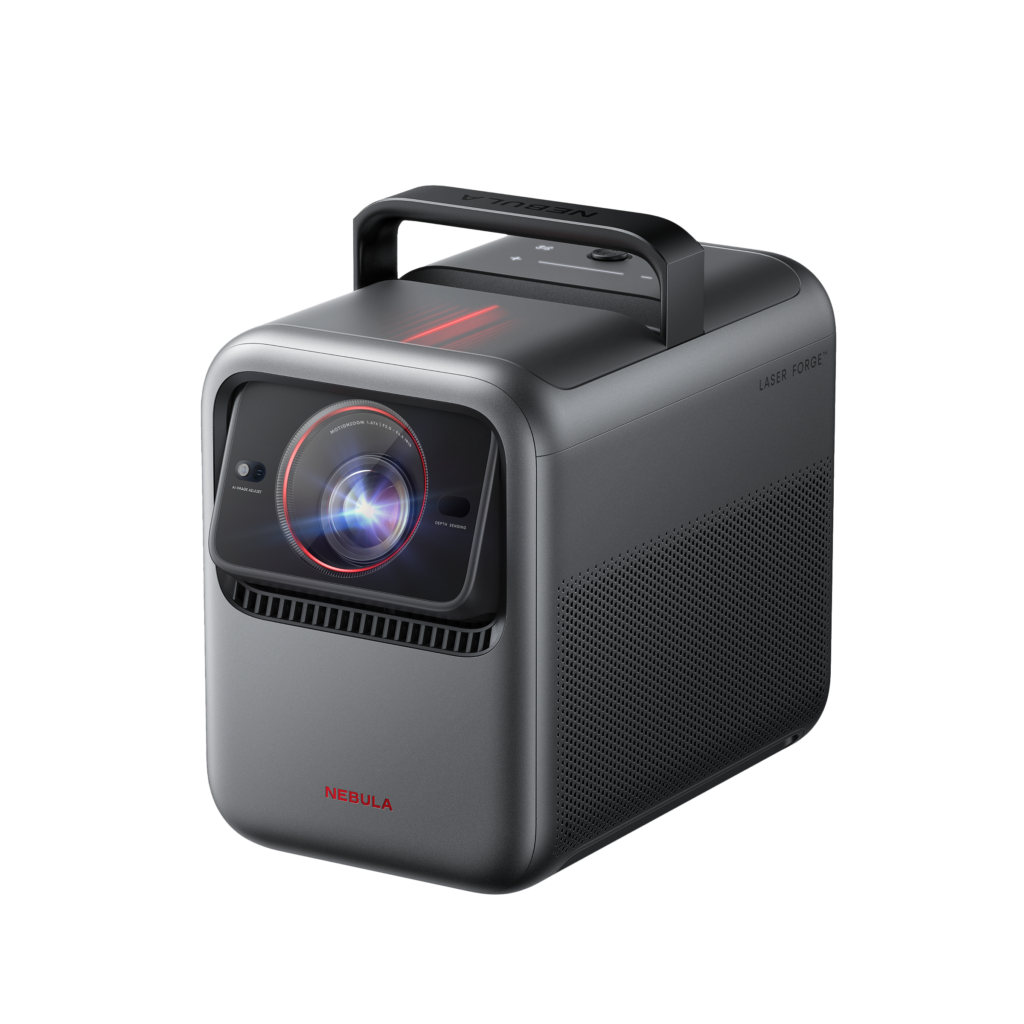
Anker Nebula X1
We don't earn anything from this link.
What we like
- +ProjectorCentral measured 2,588 ANSI lumens in its brightest accurate picture mode, the highest raw number among the three projectors under $3,000 in this guide
- +Google TV with Android 14 and native Netflix are built in
- +40W of built-in Dolby Audio sound and a carry handle for moving it room to room
What we don't
- −At $2,999.00 it costs about the same as the higher-scoring Hisense PX3-Pro
- −Measured brightness still ran about 26% under Anker's 3,500 ANSI lumen claim
- −0.90 to 1.50:1 throw ratio needs several feet more room depth than the Hisense PX3-Pro's ultra short throw design
Skip it if
Skip it if $2,999 is your ceiling and you do not need portability, since the Hisense PX3-Pro scores higher overall for close to the same money.
The Practical Math · 3 years
| Projector (Anker Nebula X1) | $2,999.00 |
| Electricity at an assumed 3 hours/day, 127W measured peak draw per ProjectorCentral's review since Anker does not publish a rated wattage, 3 years, $0.17/kWh | $70.92 |
| Light source replacement (RGB triple laser; not needed within about 3,285 hours of use at the assumed rate) | $0.00 |
| Total | $3,069.92 |
Also Consider: BenQ W2720i
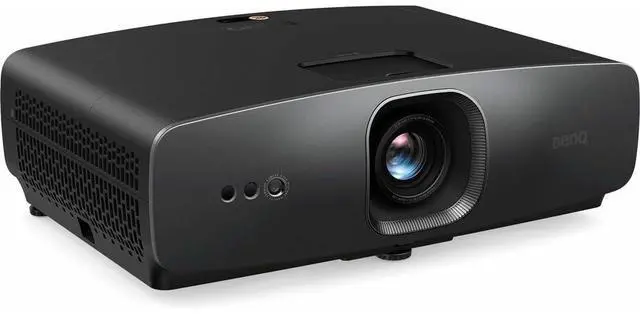
BenQ W2720i
We don't earn anything from this link.
What we like
- +At $1,799.00 it undercuts the Anker Nebula X1 and Hisense PX3-Pro by more than $1,000
- +2,000,000:1 dynamic contrast rating is the highest listed contrast figure of the four projectors here
- +4LED light source is rated for 20,000 to 30,000 hours, well past any bulb-replacement math in our 3-year cost window
What we don't
- −Built-in audio is two 5W speakers, the smallest of any projector in this guide
- −Android TV ships on a separate QS02 dongle instead of running on the projector's own board
- −ProjectorCentral measured 1,595 ANSI lumens in its accurate User mode, 36% under BenQ's 2,500 ANSI lumen claim
Skip it if
Skip it if built-in sound or a single-box smart TV setup matters to you, since it scores lowest here on both audio and smart features.
The Practical Math · 3 years
| Projector (BenQ W2720i) | $1,799.00 |
| Electricity at an assumed 3 hours/day, 290W rated draw per ProjectorCentral's spec table, 3 years, $0.17/kWh | $161.95 |
| Light source replacement (4LED, rated 20,000 to 30,000 hours; not needed within about 3,285 hours of use at the assumed rate) | $0.00 |
| Total | $1,960.95 |
What owners report
4.6 of 5 from 33 ratings on XGIMI store (Horizon Ultra product page) read Sep 16, 2026
Ratings shown on a seller's own page can leave out reviews the seller removed. We read the most recent reviews ourselves and summarize what repeats.
- +Several of the most recent reviews on XGIMI's own product page single out picture quality, with one buyer calling it better than their 4K TV, and another praising Dolby Vision and the built-in audio.
- −Two of the five most recent reviews on the same page describe hardware hiccups on long sessions: one mentions the unit heating up after extended use, another describes occasional failure to power on and input-switching problems.
Dolby vision is great audio is great ton of ports
XGIMI store review, Horizon Ultra product page, 2026
Some times it heats up after long use
XGIMI store review, Horizon Ultra product page, 2026
The specs that matter, in plain English
- ANSI lumens
- A brightness standard set by the American National Standards Institute that averages light output across nine points on a projected test image. It is the brightness spec independent testers, like ProjectorCentral in this guide, most often re-measure with a handheld light meter.
- ISO 21118 lumens
- A newer international brightness standard some brands, including XGIMI, print instead of or alongside ANSI lumens. The standard allows a measurement tolerance of about 20% versus a comparable ANSI figure, so an ISO lumen number is not a strict one-to-one match with an ANSI lumen number.
- Throw ratio
- The distance from the lens to the screen divided by the resulting image width. A throw ratio of 1.0:1 needs about 10 feet of room depth for a 10-foot-wide image; ultra short throw ratios under 0.3:1, like the Hisense PX3-Pro's 0.22:1, only need inches.
- Ultra short throw (UST)
- A projector design, like the Hisense PX3-Pro here, that sits on a low console just inches from the screen or wall and projects upward at a steep angle, instead of needing a shelf or ceiling mount several feet back.
- ALR screen
- Ambient light rejecting screen material, built with a directional coating that reflects light coming from a UST projector's steep, low angle back toward the viewer while absorbing overhead room light. It is usually sold separately from the projector, as it is with the Hisense PX3-Pro.
What changed
- Jun 20, 2026 First published with prices checked on this date.
- Sep 16, 2026 Prices and recalls re-checked.
Sources we read
- HORIZON Ultra product page - XGIMI US read Sep 16, 2026
- BenQ W2720i 4K Smart Home Cinema Projector - Newegg read Sep 16, 2026
- W2720i Specifications - BenQ US read Sep 16, 2026
- soundcore Nebula X1 4K Triple Laser Projector - Soundcore US read Sep 16, 2026
- Hisense PX3-PRO TriChroma UST Projector - Hisense Shop read Sep 16, 2026
- BenQ W2720i 4K Home Cinema Projector Review - ProjectorCentral read Sep 16, 2026
- Hisense PX3-PRO RGB Laser UST Review - ProjectorCentral read Sep 16, 2026
- Anker Nebula X1 Smart 4K Portable Projector Review - ProjectorCentral read Sep 16, 2026
- XGIMI Horizon Ultra DLP Projector Specs - ProjectorCentral read Sep 16, 2026
- BenQ W2720i DLP Projector Specs - ProjectorCentral read Sep 16, 2026
- Hisense PX3-PRO DLP Projector Specs - ProjectorCentral read Sep 16, 2026
- Anker Nebula X1 DLP Projector Specs - ProjectorCentral read Sep 16, 2026
- XGIMI Horizon Ultra 4K Hybrid LED/Laser Projector Review - Projector Reviews read Sep 16, 2026
- CPSC SaferProducts.gov Recall API, query: projector read Sep 16, 2026
We research products from published specs, certification databases, independent lab reports and owner reviews. We do not test products in our own lab. How we score.