The Best Smart Thermostats of 2026
| Product | Score | Scheduling & energy savings(30%) | HVAC compatibility(20%) | 3-Year Cost |
|---|---|---|---|---|
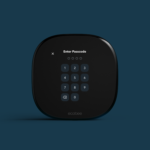 ecobee Smart Thermostat PremiumBest Overall |
8.3 |
8.5/10 |
8.5/10 |
$259.99checked Sep 15, 2026 |
| 8.2 |
8.5/10 |
9.0/10 |
$279.99checked Sep 15, 2026 | |
 Google Nest ThermostatBest Value |
8.2 |
7.5/10 |
8.0/10 |
$129.99checked Sep 15, 2026 |
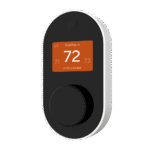 Wyze ThermostatAlso Consider |
7.0 |
6.2/10 |
6.5/10 |
$79.98checked Sep 15, 2026 |
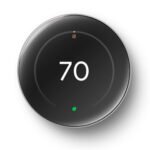
Sorted by score. Prices come from each seller's site on the date shown and change often.
Brand claim vs independent measurement
| Product | What the brand claims | Independent figure | Source |
|---|---|---|---|
| ecobee Smart Thermostat PremiumOnboard temperature sensor accuracy | Not published by ecobee | 0.07 degrees F average difference from a reference temperature data logger in lab testing (TechGearLab) | TechGearLab |
| Google Nest Learning Thermostat (4th gen)Automated heating and cooling control | Google markets it as "Energy savings made brilliant"; no lab pass/fail figure published | Consumer Reports says the 4th-gen Nest Learning Thermostat "aces CR's lab tests for automated heating and cooling" | Consumer Reports |
| Google Nest ThermostatAverage household savings for ENERGY STAR-certified smart thermostats | Google says Nest thermostats have saved an estimated $14 billion and 200 billion kWh combined since 2011 (company-wide total, not a per-unit percentage) | ENERGY STAR-certified smart thermostats save about 8% of heating and cooling bills, or about $50 a year, on average | ENERGY STAR |
| ecobee Smart Thermostat PremiumWhat ENERGY STAR certification is actually based on | ecobee says its customers saved up to 26% on heating and cooling costs, based on the company's own internal analysis, which it states has not undergone independent third-party verification | To earn the ENERGY STAR mark, smart thermostats must demonstrate annual savings based on installations in homes across the United States, not just lab conditions | ENERGY STAR |
We do not run these tests ourselves. Independent figures are quoted from the source named in each row.
The ecobee Smart Thermostat Premium is the pick for most houses with a multi-stage furnace or heat pump, because it ships with a radar occupancy sensor, a remote SmartSensor, and a Power Extender Kit that gets around a missing C-wire without an electrician. If your budget stops around $130, the Google Nest Thermostat gets you a real ENERGY STAR-certified thermostat with a 10/10 DIY install score from TechGearLab. If you want the biggest screen and don’t mind paying for it, the Google Nest Learning Thermostat (4th gen) is the one. And if you just want Wi-Fi scheduling for under $80, the Wyze Thermostat does that job, with the tradeoff that it is not ENERGY STAR certified.
We priced all four on each brand’s own store between September 15 and 16, 2026, checked the federal recall database for every model, and pulled the only independent lab measurements we could find that were published by name: TechGearLab’s sensor-accuracy tests and a public line from Consumer Reports’ thermostat roundup. Two of these four thermostats are ENERGY STAR certified; the government’s own published average for that whole certified category, not a single brand’s number, is about 8% of a heating and cooling bill, or roughly $50 a year. Keep that figure next to any brand’s bigger claim as you read.
How we picked
We weighted five criteria: scheduling and energy savings (30%), HVAC compatibility (20%), app and smart-home integrations (15%), install and wiring difficulty (15%), and 3-year cost (20%). Each product’s subscores and the weighted total are computed from those weights, not typed in by hand.
These picks come from published specs, certification databases, and named third-party measurements, not from testing units ourselves in a lab. See how we score for the full method. We read the current product and tech-spec pages on ecobee.com, store.google.com, and wyze.com; the ENERGY STAR smart thermostat FAQ and certified connected-thermostat program requirements at energystar.gov; the CPSC’s saferproducts.gov recall database; TechGearLab’s ecobee Smart Thermostat Premium review; Consumer Reports’ public thermostat roundup; and 784 customer reviews on Best Buy’s ecobee Premium product page.
What to look for
- A C-wire, or a kit that fakes one. If your furnace doesn’t have a spare “C” terminal, the thermostat needs its own adapter in the box, like ecobee’s Power Extender Kit or Wyze’s included C-wire adapter, or you’re paying an HVAC tech to run one.
- Stage support that matches your system. A 2-stage heat pump needs a thermostat rated for at least 2 stages of heating and cooling; check the brand’s own compatibility checker with your exact model number before you buy, not after.
- ENERGY STAR certification, verified, not assumed. A certified connected thermostat has to submit a full year of real installed-home data to the EPA before it earns the mark. An uncertified thermostat can still be a fine product, but don’t expect a government-audited savings number for it.
- At least one remote sensor, if your house has more than one temperature zone. A thermostat only reads the air right next to it. A bedroom that runs 4 degrees colder than the hallway needs a second sensor in that room, not a smarter algorithm at the wall.
- App support for the smart-home platform you already run. Confirm HomeKit, Matter, or Alexa support on the current spec page, since a brand can add or drop platform support between hardware generations.
- Total 3-year cost with no required subscription. None of the four thermostats in this guide need a paid plan to schedule and control heating and cooling; if a model you’re considering does, add that to its sticker price before comparing.
FAQ
Do smart thermostats actually save money?
ENERGY STAR’s own published figure for its certified smart thermostat category is about 8% of a heating and cooling bill, or roughly $50 a year, on average, with real savings depending on climate and how the house is already run. Individual brands publish higher numbers from their own data. ecobee, for example, says its customers saved up to 26% on heating and cooling costs, based on the company’s own internal analysis, which it states has not been independently verified. Google says Nest thermostats have saved an estimated $14 billion and 200 billion kWh combined since 2011, a company-wide total rather than a per-thermostat percentage.
Do I need a C-wire to install one of these?
Not necessarily. The ecobee Smart Thermostat Premium ships with a Power Extender Kit, and the Wyze Thermostat ships with its own C-wire adapter, both built to run the thermostat off your existing low-voltage wiring. Google’s Nest thermostats use Power Sharing, which Google says covers all but a small share of homes without needing a separate C-wire or adapter kit.
Which of these has the widest HVAC compatibility?
Based on the published spec sheets, the Google Nest Learning Thermostat (4th gen) supports the most heating and cooling stages of the four, up to 3 stages of heat and 3 of cooling plus 2-stage auxiliary or emergency heat. The ecobee Smart Thermostat Premium is rated for up to 2 stages of heating and cooling. Always run your exact HVAC model through the brand’s own compatibility checker before ordering.
Is ecobee or Nest better for Apple HomeKit?
Both work with Apple Home. The ecobee Smart Thermostat Premium has Siri built into the unit itself, so you can talk to it directly without a separate HomePod or speaker in the room, which is not something either Nest model offers.
Do any of these thermostats need Wi-Fi to keep working?
Wi-Fi is required for remote control, weather-based adjustments, and voice assistant features on all four thermostats. If your home Wi-Fi goes down, each thermostat keeps running its last saved schedule locally; you just lose app control and any cloud-based automations until the connection comes back.
Best Overall: ecobee Smart Thermostat Premium
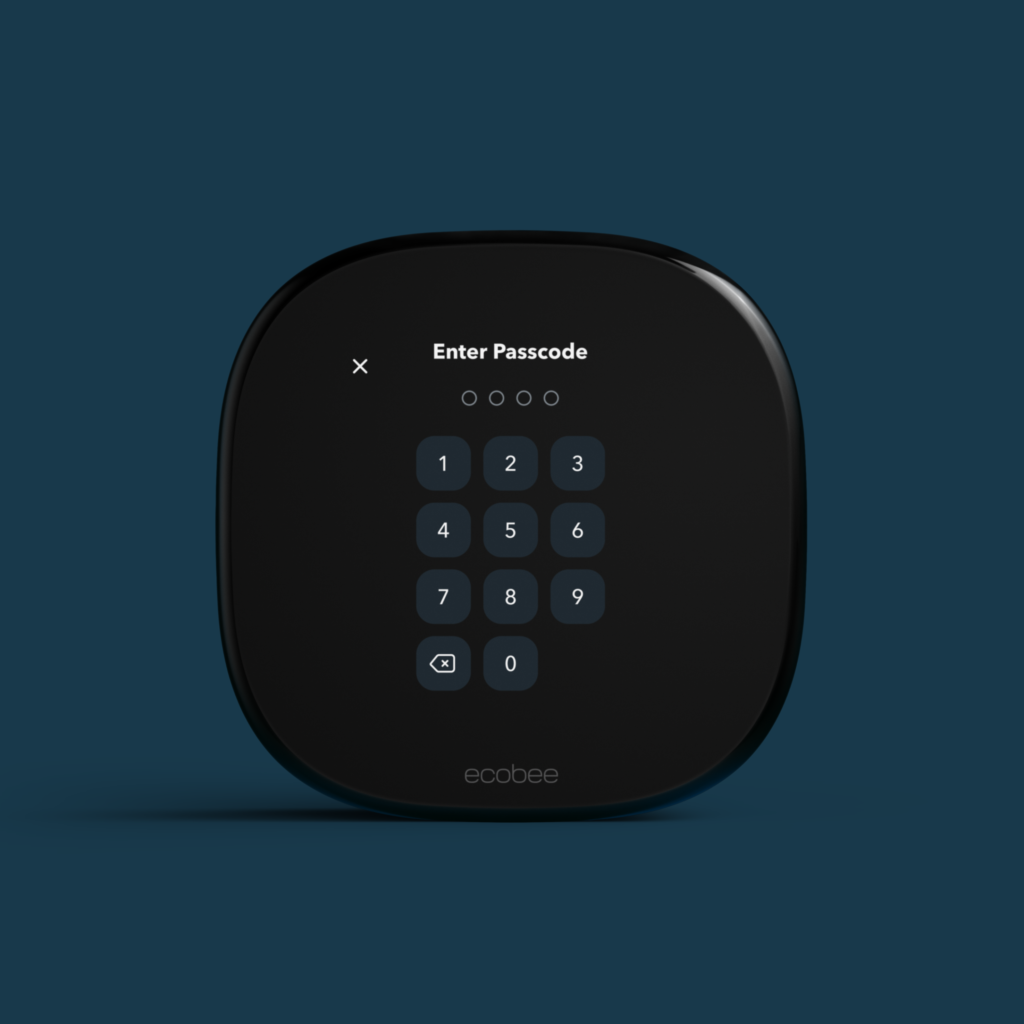
ecobee Smart Thermostat Premium
We don't earn anything from this link.
What we like
- +Built-in Siri or Alexa, no separate speaker needed in the room
- +Radar occupancy and proximity sensing plus a bundled remote SmartSensor
- +Power Extender Kit included for homes without a C-wire
What we don't
- −Rated for only 2 heating/cooling stages, fewer than the Nest Learning Thermostat's 3
- −Highest 3-year cost of the four picks
- −Glass touchscreen face; Best Buy reviewers note it can chip if dropped during install
Skip it if
You have a 3-stage heat pump or don't want to pay a premium price for a built-in speaker and room sensor you may not use.
The Practical Math · 3 years
| Thermostat with 1 SmartSensor and Power Extender Kit, one-time purchase | $259.99 |
| Total | $259.99 |
Also Great: Google Nest Learning Thermostat (4th gen)
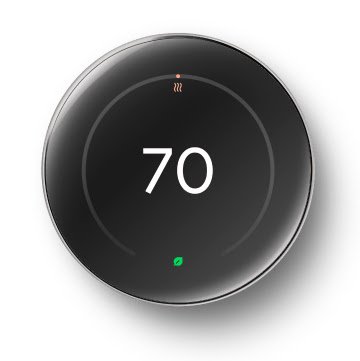
Google Nest Learning Thermostat (4th gen)
We don't earn anything from this link.
What we like
- +Supports the most heating and cooling stages of the four picks
- +Bundled Nest Temperature Sensor included at this price
- +Power Sharing avoids a separate C-wire adapter in most homes
What we don't
- −Highest sticker price of the four
- −Early units shipped with a display some owners found too dim before Google's brightness update
- −No built-in voice assistant speaker like the ecobee Premium
Skip it if
You want a built-in speaker and voice assistant in the thermostat itself, or you're on a tight budget.
The Practical Math · 3 years
| Thermostat with 1 Nest Temperature Sensor, one-time purchase | $279.99 |
| Total | $279.99 |
Best Value: Google Nest Thermostat
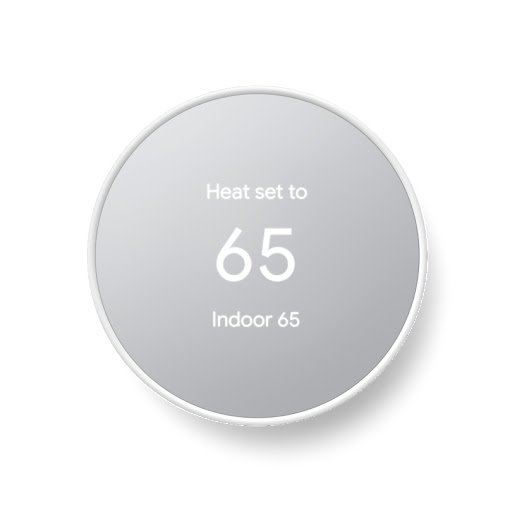
Google Nest Thermostat
We don't earn anything from this link.
What we like
- +Lowest price of the two ENERGY STAR-certified picks in this guide
- +TechGearLab scored its DIY installation a perfect 10 out of 10
- +AAA battery backup keeps settings if HVAC power is interrupted
What we don't
- −No bundled remote sensor
- −Smaller, dimmer display than the Learning Thermostat
- −Fewer heating/cooling stages supported than the 4th-gen Learning Thermostat
Skip it if
You have a multi-zone home that needs a remote room sensor out of the box.
The Practical Math · 3 years
| Thermostat, one-time purchase | $129.99 |
| Total | $129.99 |
Also Consider: Wyze Thermostat
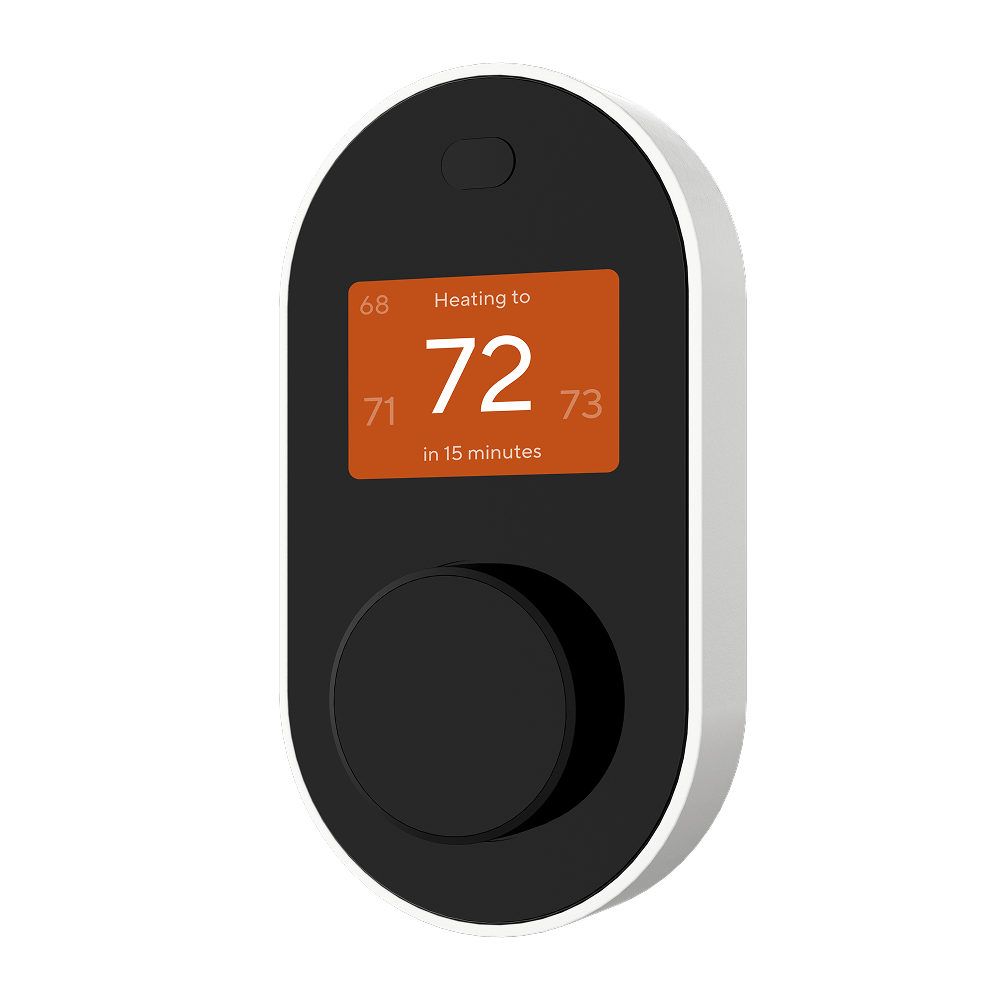
Wyze Thermostat
We don't earn anything from this link.
What we like
- +Lowest price of the four picks by a wide margin
- +C-wire adapter included in the box
- +Works with Alexa and Google voice assistants
What we don't
- −Not ENERGY STAR certified as of this writing, by Wyze's own product FAQ
- −No bundled remote room sensor
- −Fewer years on the market than ecobee or Nest, so long-term reliability data is thinner
Skip it if
ENERGY STAR certification or a government-audited savings figure matters to your purchase decision.
The Practical Math · 3 years
| Thermostat with C-wire adapter, one-time purchase | $79.98 |
| Total | $79.98 |
What owners report
4.6 of 5 from 784 ratings on Best Buy product reviews (ecobee Premium listing) read Sep 16, 2026
Ratings shown on a seller's own page can leave out reviews the seller removed. We read the most recent reviews ourselves and summarize what repeats.
- +Best Buy's own review tags mark ease of use and air quality monitoring as the two most-cited pros among the 784 ratings on the ecobee Premium listing.
- −Best Buy's review tags flag HVAC compatibility as a con in 4 of the 784 reviews and app usability in 3, the two most-cited cons on that listing.
One downer that I discovered after purchasing is that you WILL NOT get the interactive doorbell screen unless you already have an ecobee doorbell.
Best Buy customer reviews, ecobee Premium listing, around Oct 2025
The touchscreen is bright, responsive, and easy to navigate, and the installation process was straightforward.
Best Buy customer reviews, ecobee Premium listing, around Aug 2026
The specs that matter, in plain English
- C-wire
- The common wire that gives a thermostat continuous 24VAC power from the HVAC transformer. Older systems often lack one, which is why several smart thermostats ship with an adapter kit instead.
- 24VAC system
- The low-voltage control wiring standard used by most US residential furnaces, air conditioners, and heat pumps, as opposed to line-voltage baseboard heat, which most smart thermostats in this guide do not support.
- ENERGY STAR certified connected thermostat
- A smart thermostat that has submitted a year of real, anonymized in-home usage data to the EPA and met its energy-savings and demand-response requirements, as opposed to a thermostat that only carries a brand's own savings claim.
- Power Extender Kit (PEK)
- ecobee's small adapter that lets its thermostats run without a dedicated C-wire by borrowing power through the existing heating and cooling wires.
What changed
- Apr 20, 2026 First published with prices checked on this date.
- Sep 16, 2026 Prices and recalls re-checked.
Sources we read
- ecobee Smart Thermostat Premium product page read Sep 16, 2026
- ecobee Savings page (methodology and 26% claim) read Sep 16, 2026
- Google Store: Nest Learning Thermostat (4th gen) read Sep 16, 2026
- Google Store: Nest Learning Thermostat (4th gen) tech specs read Sep 16, 2026
- Google Store: Nest Thermostat read Sep 16, 2026
- Google Store: Nest Thermostat tech specs read Sep 16, 2026
- Wyze Thermostat product page read Sep 16, 2026
- Google: Nest thermostats energy savings milestone ($14B, 200B kWh since 2011) read Sep 16, 2026
- ENERGY STAR Smart Thermostats FAQ (savings figure and certification basis) read Sep 16, 2026
- TechGearLab: ecobee Smart Thermostat Premium review read Sep 16, 2026
- Consumer Reports: Best Smart Thermostats of the Year roundup read Sep 16, 2026
- Best Buy: ecobee Premium customer reviews (784 ratings) read Sep 16, 2026
- CPSC SaferProducts.gov recall database query: thermostat read Sep 16, 2026
We research products from published specs, certification databases, independent lab reports and owner reviews. We do not test products in our own lab. How we score.